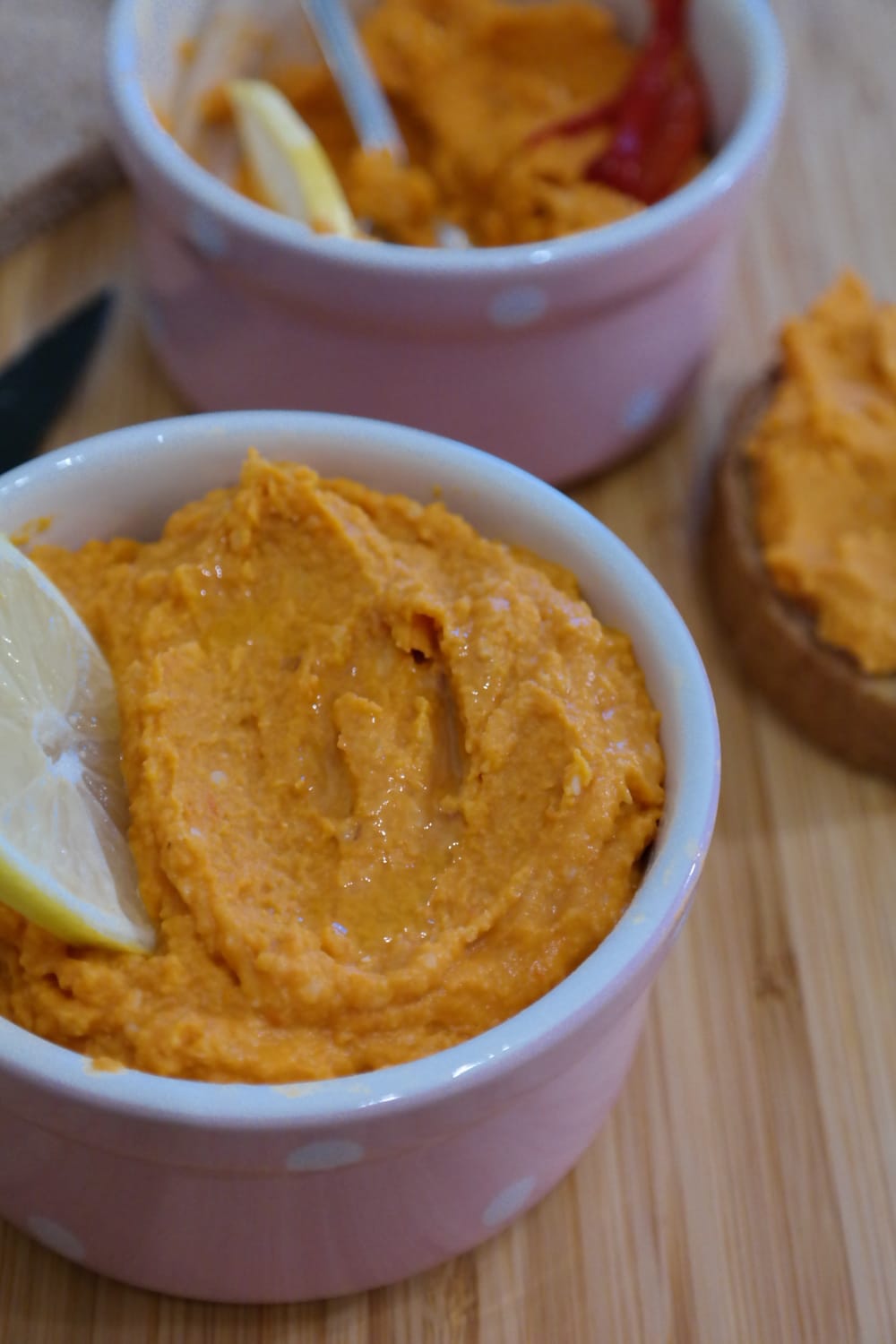
This roasted red pepper hummus started with one very practical problem: I didn’t have any tahini. And I couldn’t quite see myself making sesame paste from scratch. Who has time for everything, right? 😀 So I left the tahini out and made a chickpea spread with roasted red pepper instead.
The roasted pepper adds a gentle sweetness and a lovely color. You can serve the hummus for breakfast, add it to an appetizer spread or pack it for lunch. It’s the sort of thing that works just as well on a slice of bread as it does in a bowl with vegetables alongside.
You’ll find the exact quantities and full instructions in the recipe card. First, here are a few useful pointers about the texture, the chickpeas and what to serve with it.
Why You’ll Love This Roasted Red Pepper Hummus
You don’t need a jar of tahini in the cupboard to make a tasty chickpea dip. This version uses sesame seeds, so it has a different flavor and texture from hummus made with sesame paste. The roasted pepper brings its own character, with a subtle sweetness that comes through in the finished spread.
Canned chickpeas keep the preparation straightforward. They’re already cooked, so there’s no overnight soaking or separate pot of chickpeas to simmer. You can decide to make this without planning the day before, which is always helpful when you just want something to spread on bread.
It’s also a vegan recipe, made entirely with plant-based ingredients. One detail is worth keeping clear, though: no tahini does not mean no sesame. The seeds are part of the recipe, even though there’s no sesame paste.
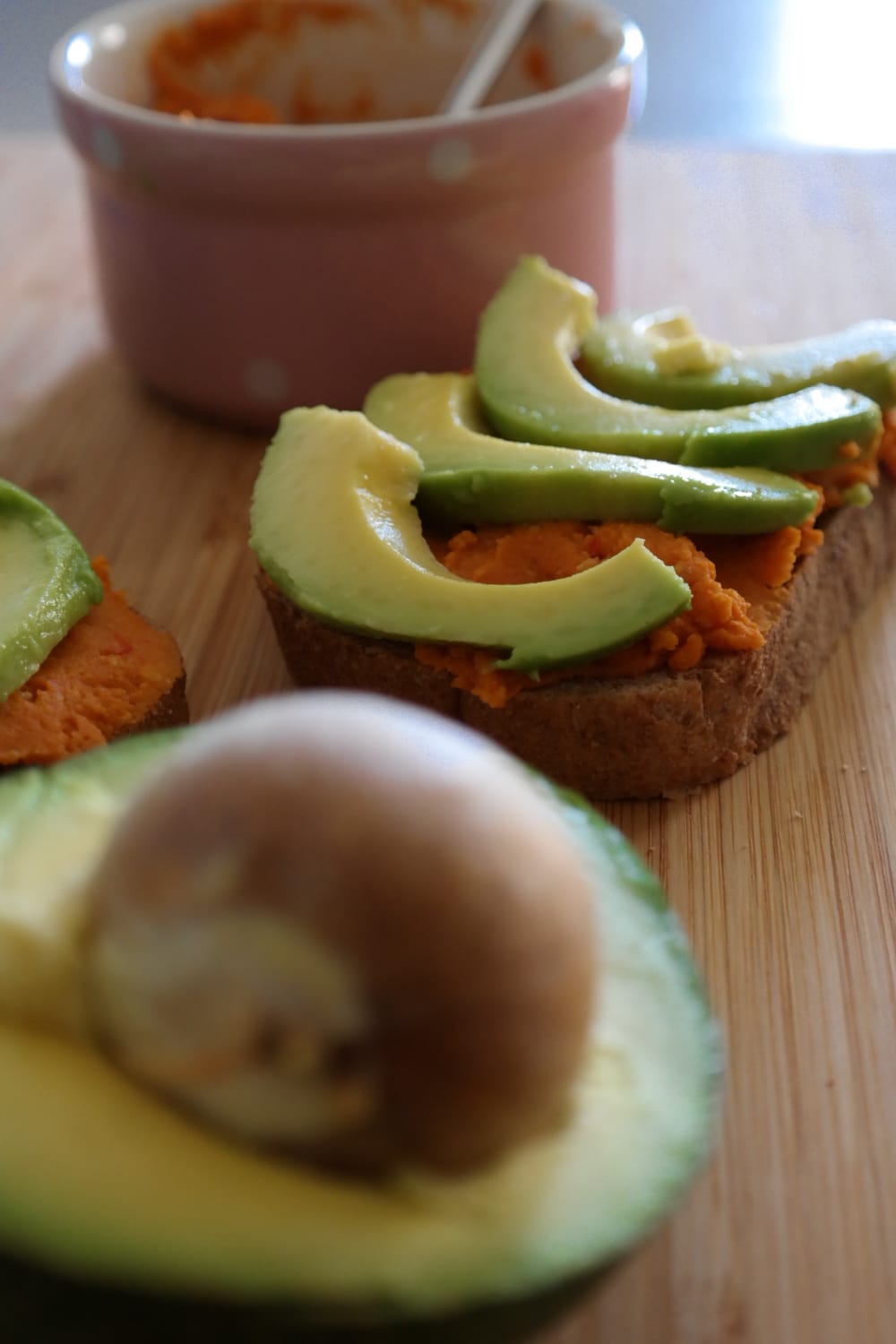
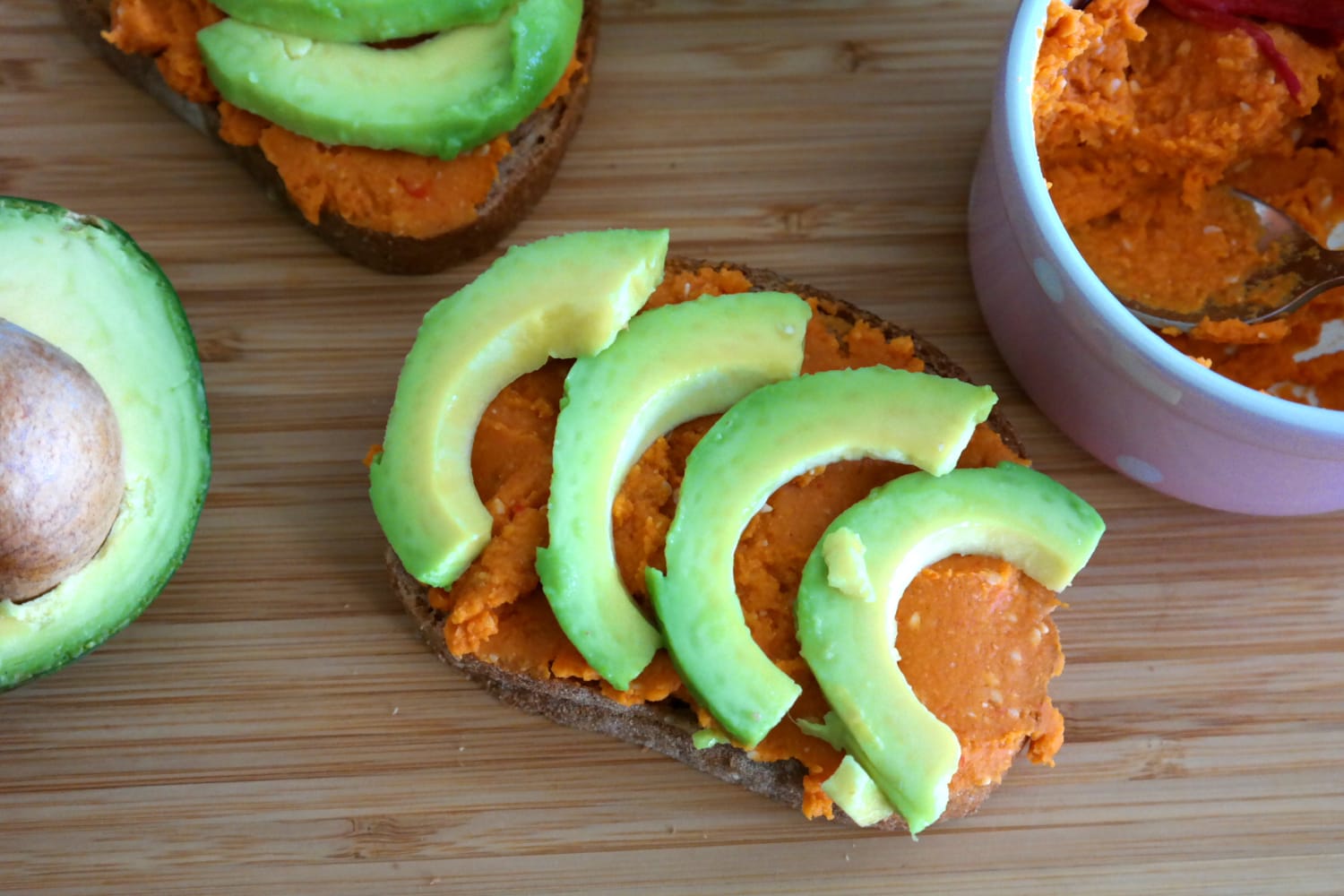
And it doesn’t have to stay in the appetizer bowl. Spread it inside a sandwich, use it in a vegetable wrap or serve it as a snack with toast. The same batch can fit into several different meals without needing a different recipe each time.
Tips for the Best Texture and Flavor
Use the drained weight of the chickpeas
The 400 g can of SunFood chickpeas I use contains 240 g of drained chickpeas. The larger number includes the liquid in the can; it isn’t the amount of chickpeas that goes into the food processor.
This matters because it affects the balance of the whole recipe. Using 400 g of drained chickpeas would mean considerably more chickpeas in relation to the pepper and the other ingredients, giving you a different consistency. If you’re using another brand, check the drained weight on the label or weigh the chickpeas after draining.
Chickpeas are also sold as garbanzo beans, so either name may appear on the can. The important detail here is the amount of cooked, drained beans, rather than matching the size of the can.
Look for soft flesh, not just browned skin
For this dip, the pepper needs to be cooked through. Soft flesh blends into the chickpeas more easily, without leaving firm pieces throughout the spread.
Roasting time is a guide rather than an exact promise. The size of the pepper and the oven both make a difference, so look at the browning and check that the flesh has softened instead of relying only on the timer.
I use a capia pepper, a long, sweet red pepper commonly used in Romanian cooking. That’s the pepper specified in the recipe card, rather than a hot red pepper.
Give the food processor time to work
A small batch can collect around the sides of a large food processor bowl, out of reach of the blades. If that happens, switch the machine off and scrape down the sides with a spatula before continuing.
Don’t judge the texture after the first few seconds. The chickpeas and sesame seeds need to be broken down, not simply stirred together. The final result also depends on your machine: aim for an even, spreadable mixture without large pieces of chickpea.
The sesame seeds may still be slightly noticeable if your processor is less powerful. You don’t need a completely silky texture for this to be an enjoyable dip.
Taste before adding more salt
Depending on the brand, canned chickpeas may already contain salt. Taste the mixture before adding more, especially if you’re serving it with salty crackers or other seasoned appetizers.
The lemon helps balance the sweetness of the roasted pepper, too. Wait until everything is evenly blended before judging the flavor, rather than tasting a spoonful that happens to contain more pepper or more chickpeas.
How to Serve Roasted Red Pepper Hummus
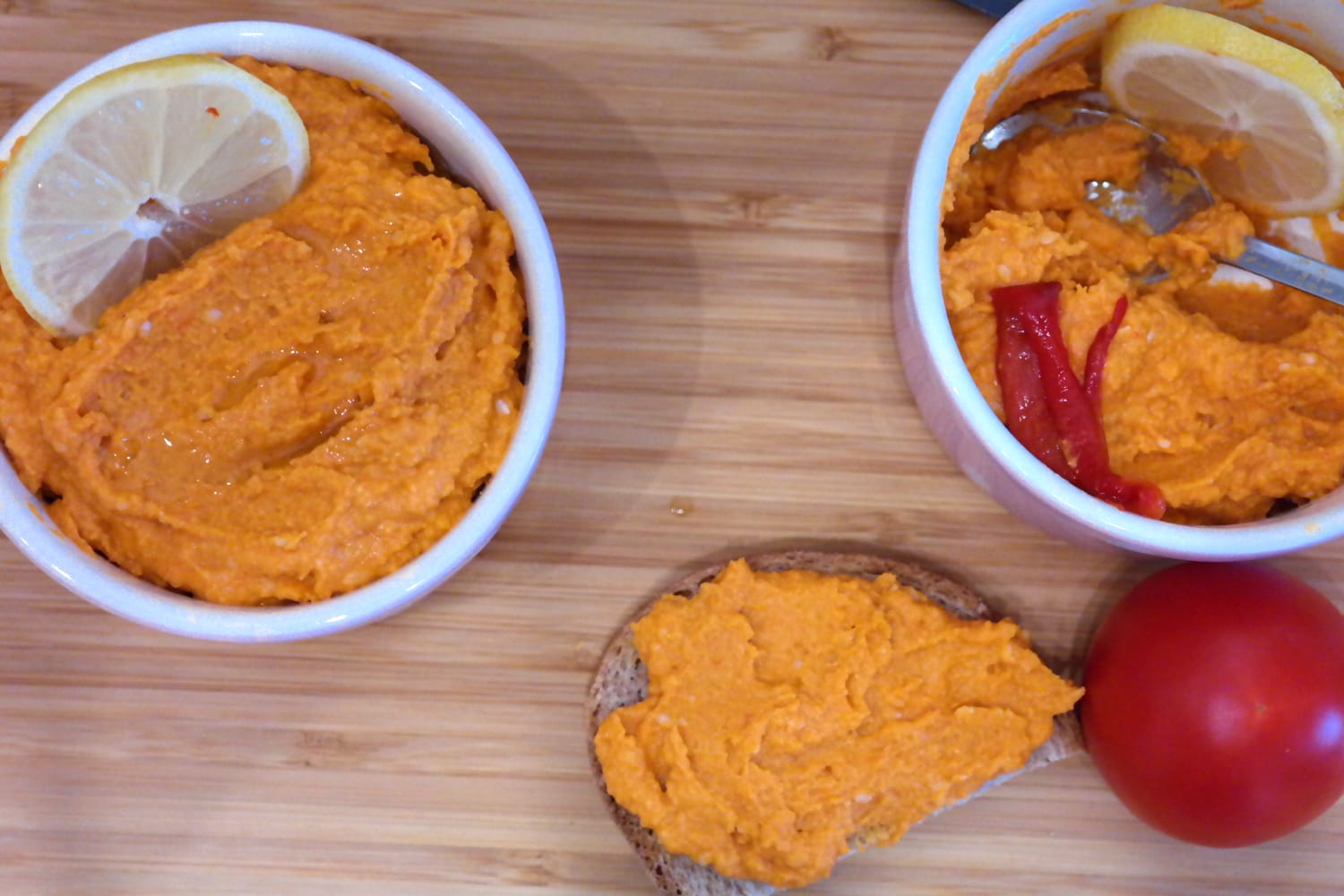
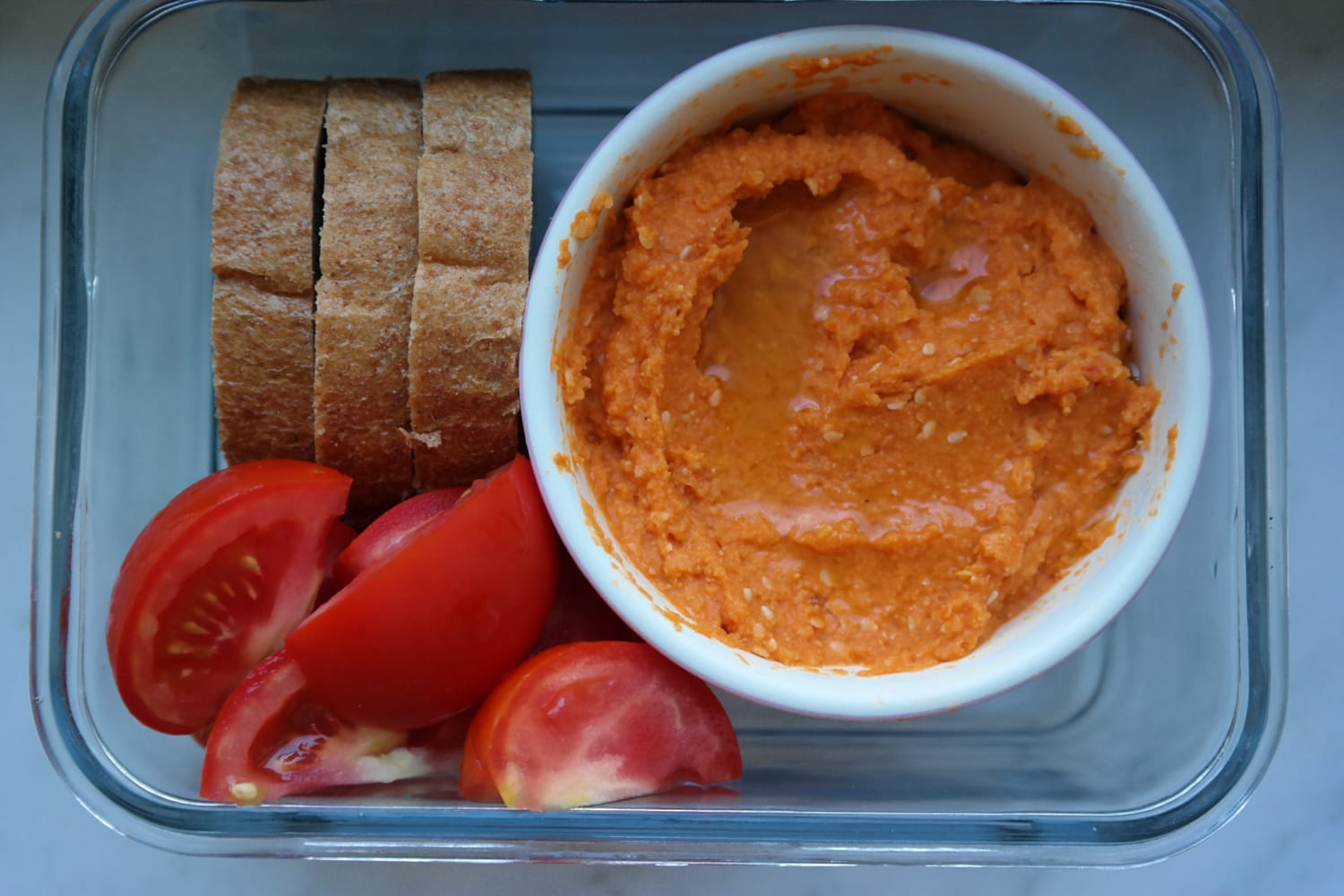
The simplest option is a slice of bread, lightly toasted if you like. The contrast between the soft spread and the crisp bread works well without much else on the plate.
For a shared appetizer, serve the hummus in a bowl with carrot, cucumber or pepper sticks alongside. Keep the vegetables separate so everyone can choose what they want to dip.
You can also use it as the spread in a sandwich, with vegetables and a few lettuce leaves on top. If you’re making a wrap, resist the temptation to overfill it: the hummus should help bring everything together, without the filling escaping at the first bite. 😀
For a packed lunch, use a tightly sealed container and keep the hummus chilled until you’re ready to eat. Pack bread, crackers or vegetables separately so anything crunchy stays that way.
If you’re putting together a larger appetizer platter, include a few different textures: fresh vegetables, crisp bread and another spread. Every bowl doesn’t need to have the same flavor or consistency.
Frequently Asked Questions
Do sesame seeds give the same result as tahini?
Not exactly. Tahini is sesame paste that has already been ground, whereas the seeds here are blended with the other ingredients. This hummus has its own flavor and texture, with the roasted pepper coming through clearly.
Do I need to peel the chickpeas?
No. This recipe uses the chickpeas with their skins on, after rinsing and draining. There’s no extra peeling step before they go into the food processor.
Does this hummus contain garlic?
No, this version is made without garlic. That keeps the flavor gentle and lets the roasted pepper and sesame stand out.
More Recipes You Might Like
For a table of spreads to share, serve this hummus alongside a spinach ricotta spread or a roasted eggplant salad. And if you’d like homemade flatbread to go with it, there’s a no-knead option below, too.
Spinach Ricotta Spread – A creamy alternative for toast and sandwiches, with the delicate flavor of ricotta. You can also use it as a sauce for pasta or gnocchi.
Roasted Eggplant and Pepper Salad Without Mayo – Another spread in which roasted peppers bring sweetness, this time alongside eggplant and onion. Serve it on bread or as part of a platter with fresh vegetables.
High-Protein Cottage Cheese Flatbread – Soft flatbreads made without yeast or rising time, ready to serve with hummus and vegetables. They contain dairy and eggs, so this pairing isn’t vegan.

Roasted Red Pepper Hummus Recipe Without Tahini
4
servings15
minutes20
minutes240
kcalA gently flavored chickpea spread with the sweetness of roasted red pepper. Serve it as an appetizer, a breakfast spread or a savory snack.
Ingredients
1 × 400 g can chickpeas, drained and rinsed – 240 g drained weight; I use SunFood
1 capia pepper (sweet pointed red pepper), roasted, peeled, stemmed and deseeded
4–5 tablespoons olive oil
1 tablespoon lemon juice
Salt, to taste
1 tablespoon sesame seeds
Directions
- Preheat the oven to 180°C / 350°F, using the grill setting. Wash the capia pepper and place it on a baking tray lined with baking parchment suitable for that temperature and grill use, following the parchment manufacturer’s instructions.
- Place the tray on the middle oven rack and cook the pepper for approximately 20 minutes, until browned and the flesh is soft. The cooking time depends on your oven and the size of the pepper.
- Turn off the oven, remove the tray and let the pepper cool until it can be handled comfortably.
- Remove the skin, stem and seeds, then place the pepper flesh in a food processor.
- Drain and rinse the chickpeas, then leave them in a sieve to drain thoroughly. Add them to the food processor.
- Add the olive oil, lemon juice, salt and sesame seeds.
- Blend until evenly combined and spreadable. If needed, switch off the processor, scrape down the sides with a spatula and continue blending.
Note
- Nutritional values are estimates and may vary depending on the ingredients used and serving sizes.