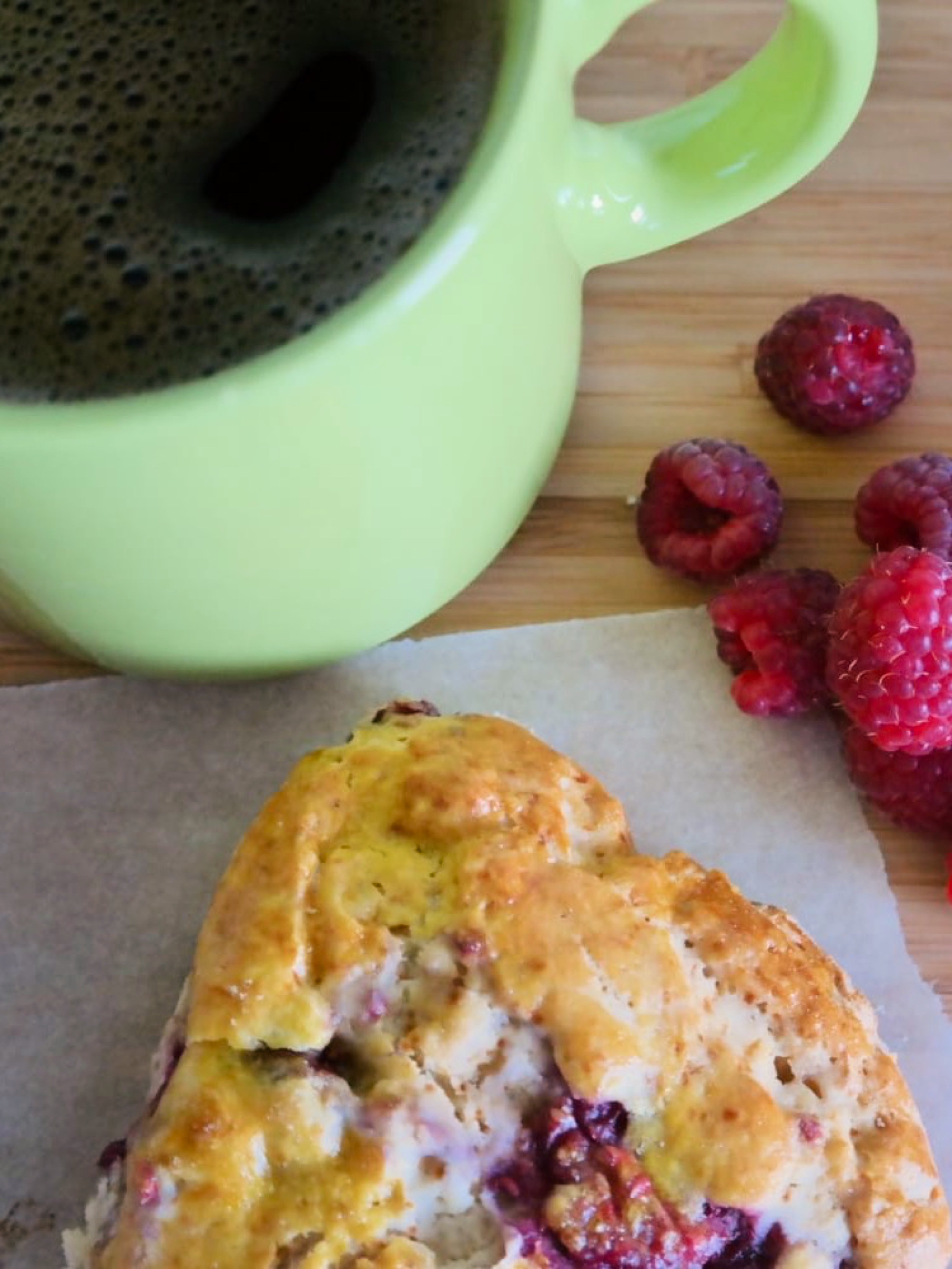
You’d never guess how long I’d been meaning to try making scones. Ever since I started watching Downton Abbey, where Lady Violet — my favourite character, by the way 😊 — would have her tea with these lovely little treats. It took me about two years to finally make these raspberry honey scones.
Every time, I’d think, “Right! Tomorrow I’m making some!” Except that “tomorrow” kept moving further down the calendar. Eventually, their day came. After all that waiting, the recipe turned out to be much easier than those two years of putting it off might suggest. 😁
What Are Scones?
Scones are small baked treats closely associated with the British tradition of afternoon tea. They have a tender, slightly crumbly interior and a delicate crust. If you’re more familiar with American biscuits, the texture has some similarities, although the two aren’t quite interchangeable.
Classic scones are often served with jam and clotted cream, a very thick, rich cream. But there are also versions with fruit mixed into the dough, chocolate scones and savoury variations. They can be round or triangular, so their shape alone doesn’t define them.
In this recipe, baking powder helps the dough rise, so there’s no yeast and no need to let the dough rise. My raspberry and honey version has fruit folded into the dough, rather than being a plain scone served with jam.

Why This Recipe Is Worth Trying
It’s an approachable recipe if you’re making scones for the first time. There’s no yeast dough to manage and no complicated pastry technique to master. The main thing is to pay attention to the dough and resist the temptation to knead it until it’s perfectly smooth.
The raspberries and honey give these scones a distinctive flavour. The berries add tartness, while the honey works nicely with the vanilla. They’re a good option when you feel like baking something with fruit but don’t fancy making a tart with several separate components.
You don’t need special cutters or moulds. These scones have a simple, rustic appearance, with no fiddly shapes or decorations. They don’t have to look identical to make an inviting plateful.
They go well with tea or coffee. Serve them as a sweet snack or as part of a leisurely weekend breakfast. And if a television series brought you here too, at least you already have something to watch during your tea break. 😉

Tips for Making Raspberry Honey Scones
Keep the Butter Cold
The temperature of the butter matters in this type of dough. Small pieces of cold butter distributed through the flour help create layers during baking. If the butter softens completely before the tray reaches the oven, the result can be different.
You’re not aiming for a perfectly smooth mixture of butter and flour. A crumbly texture with a few visible pieces of butter is what you want here. If your kitchen is very warm and the butter starts softening, briefly chilling the mixture can help.
Handle the Raspberries Gently
Raspberries crush easily, especially when they’re very ripe. Choose berries that still hold their shape and handle the dough gently once you’ve added them.
A few crushed berries don’t mean the recipe has gone wrong. There’s no need to keep mixing just to distribute the raspberries perfectly through every little bit of dough. Working it more for the sake of appearance can cost you the tender texture you’re trying to achieve.
Don’t Add Flour at Every Sign of Stickiness
A slightly sticky dough isn’t necessarily a problem. A dusting of flour on the work surface makes it easier to handle, but adding too much can leave you with drier scones.
That’s also why weighing the flour helps: you start with the same amount each time and have a more reliable reference for how the dough should feel. Heaped tablespoons can look quite different from one kitchen to another.
Use a Sharp Knife
A knife that cuts cleanly is better than one you have to press and drag repeatedly through the dough. A straight downward cut helps keep the edges from being unnecessarily compressed.
There’s no need for specialist pastry equipment. A sharp kitchen knife is enough; how you use it matters more than having a particular tool.

Frequently Asked Questions
Why Are My Scones Hard?
Overworking the dough and adding too much flour during shaping are two possible causes. Work the dough only until it comes together, rather than kneading it as you would bread dough. If the scones turn out dry, it’s also worth checking the baking: ovens can brown food differently, even at the same displayed temperature.
Can I Use a Food Processor?
Yes, to incorporate the butter into the flour, but use short pulses and check the texture often. A food processor can break down the butter very quickly, and you don’t want the mixture to become a paste. Working by hand gives you good control at this stage and saves you another piece of equipment to wash.
Can I Use Blueberries Instead of Raspberries?
Yes, you can use blueberries. They hold their shape better, which makes them easier to work into the dough. I couldn’t find any when I made this recipe, so I used raspberries instead.
What Kind of Cream Should I Use?
Use liquid whipping cream, also sold as heavy whipping cream. Add it straight from the carton, without whipping it first.
Can I Serve These Scones for Breakfast?
Yes, you can serve them for breakfast or as a snack with tea or coffee. They don’t need an elaborate presentation. For a breakfast with a few more options, serve them alongside fresh fruit and plain yoghurt so everyone can choose their own combination.
More Cookie and Tart Recipes to Try
If you enjoy individual desserts or want a few more ideas for your baking list, here are three recipes from the blog with different flavours and textures:
Ricotta Cookies — soft, fluffy cookies with a vanilla flavor and a texture quite different from crisp biscuits. They’re a good choice if you enjoy delicate little treats with your coffee. The post also includes a version with walnuts and dried mango.
Chocolate Brownie Cookies with Walnuts and Caramel — for days when you’re craving something richer. These small cookies bring together chocolate, walnuts and caramel, with several textures in each bite.
Mini Sour Cherry Tarts with Vanilla Pastry Cream and Italian Meringue — individual fruit desserts with a tender pastry base, smooth cream and tart cherries. They have more components than scones, but they’re worth considering when you have a little more time to spend baking.
Raspberry Honey Scones – An Easy Recipe for Tea or Coffee
8
scones30
minutes25
minutes315
kcalRaspberry honey scones with a hint of vanilla and a golden crust, lovely alongside a cup of tea or coffee.
Ingredients
- For the dough
300 g plain flour (all-purpose flour)
10 g baking powder
A small pinch of salt
100 g cold butter, straight from the fridge
1 large egg
100 ml whipping cream
1 teaspoon vanilla essence
2 tablespoons honey
125 g raspberries
- For brushing
1 tablespoon whipping cream
1 egg yolk
- For the work surface
A little extra flour, for dusting
Directions
- Preheat the oven to 180°C / 350°F. Line a baking tray with baking parchment.
- Combine the flour, baking powder and salt in a large bowl.
- Cut the cold butter into small cubes and add it to the flour. Rub it in with your fingertips until the mixture is crumbly, without working it into a paste.
- In a separate bowl, whisk together the egg, whipping cream, vanilla essence and honey.
- Pour the wet mixture into the flour and butter mixture. Stir until the dough begins to come together.
- Add the raspberries and gently work them into the dough, handling it only as much as necessary.
- Turn the dough out onto a lightly floured work surface. Bring it into a ball, then flatten it into a disc about 2 cm thick.
- Cut the disc into 8 triangular wedges, as you would slice a cake. Arrange them on the prepared tray.
- Mix the egg yolk with the tablespoon of whipping cream. Brush the tops of the scones with the mixture.
- Bake in the preheated oven at 180°C / 350°F for 25 minutes, until golden brown.
Note
- Nutritional values are estimates and may vary depending on the ingredients used and the size of the portions.