For a few years now, we’ve had a family tradition: we pick one month out of the year to eat exclusively home-cooked meals. No online deliveries, no dining out. This helps us stick to a structured meal plan, but it also pushes us to try new recipes and diversify our weekly menu.
This year, we added an extra challenge to the mix: going completely meat-free for the entire month.
What we learned after a month without meat:
- We significantly increased our cheese consumption to make up for the lack of meat, which actually led to higher cholesterol levels 😱 – lesson learned: balance is everything.
- Our food budget didn’t change at all, proving that meat isn’t necessarily the most expensive item in the grocery cart.
- It was a bit harder to meet our daily protein goals while keeping the same calorie intake. We ended up using protein powder, even though it’s definitely not my favorite.
- We ate a much wider variety of vegetables than usual and discovered, for instance, that we absolutely love lentils.
- I became much more creative with ingredients and ended up making completely new flavor combinations.
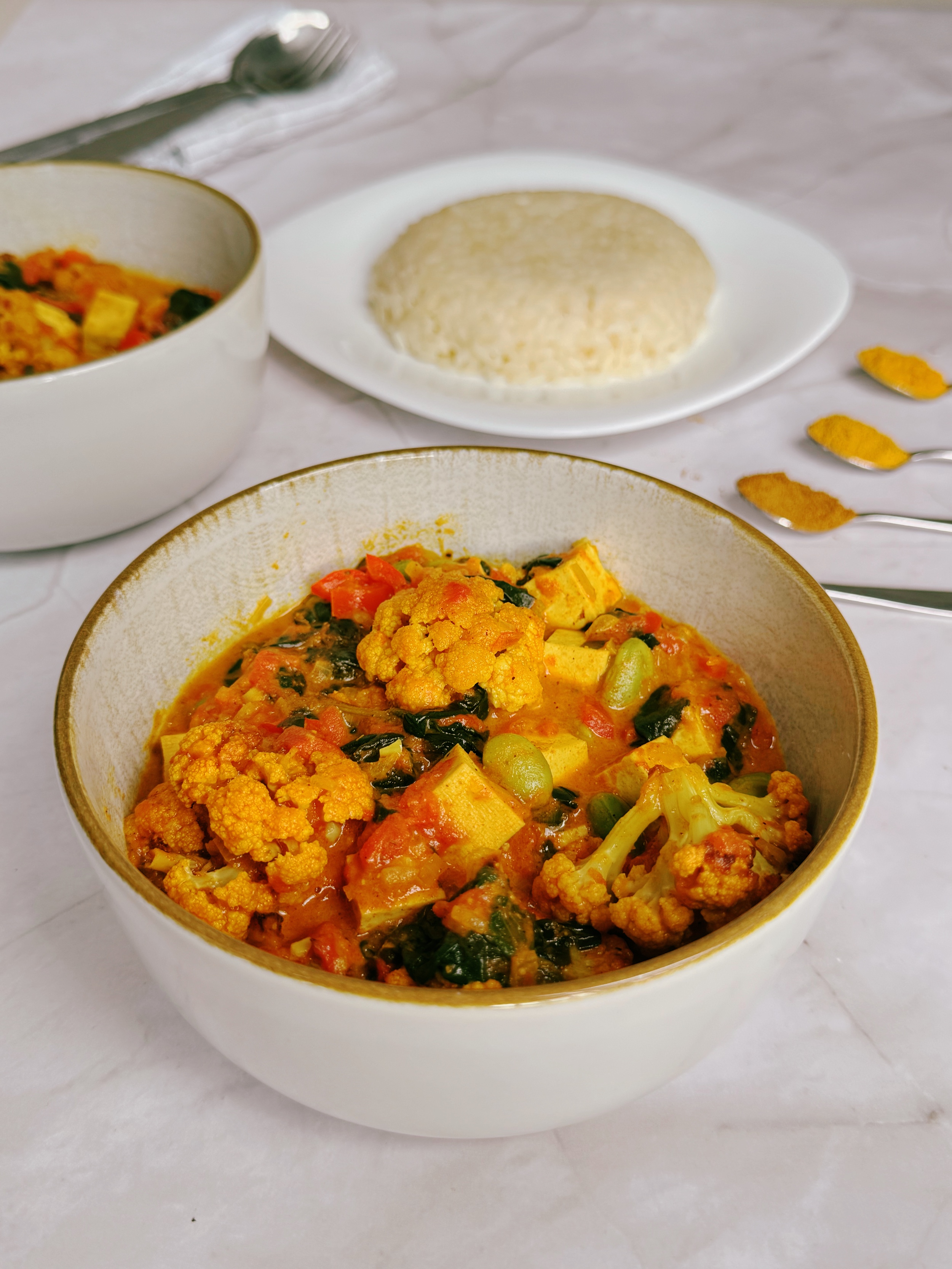
That’s how today’s recipe came to life – a vegetarian cauliflower and tofu curry that has officially earned a permanent spot on our menu, even long after our “detox” month ended. This cauliflower curry quickly became a true comfort food staple for those moments when we crave a warm, flavorful, and slightly more sophisticated kind of stew.
I kept tweaking the recipe along the way. Initially, I used cauliflower and chickpeas, then I swapped the chickpeas for lentils, later replaced the lentils with edamame, and so on 😉. In today’s version, I chose to include tofu as well for a more authentic taste.
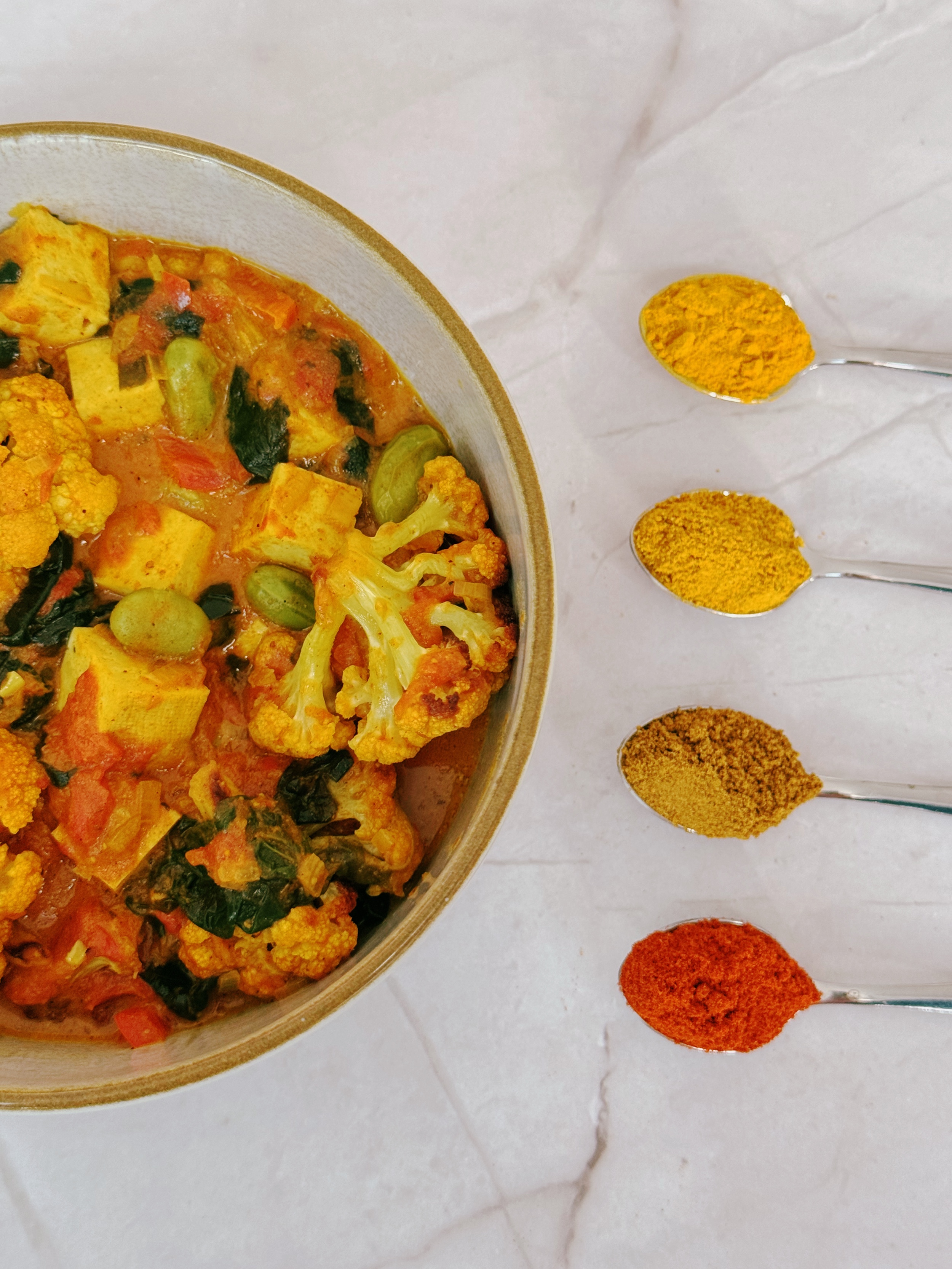
Why you’ll love this cauliflower and tofu curry:
- It contains a lot of vegetables, which guarantees a rich, intense flavor and high-quality nutrients.
- It comes together fast, no need to spend hours standing over the stove.
- You can easily swap out some of the vegetables for whatever you already have in the fridge or use your personal favorites.
- It can be enjoyed on its own as a hearty stew or served alongside a simple side of white rice.
What you’ll need:
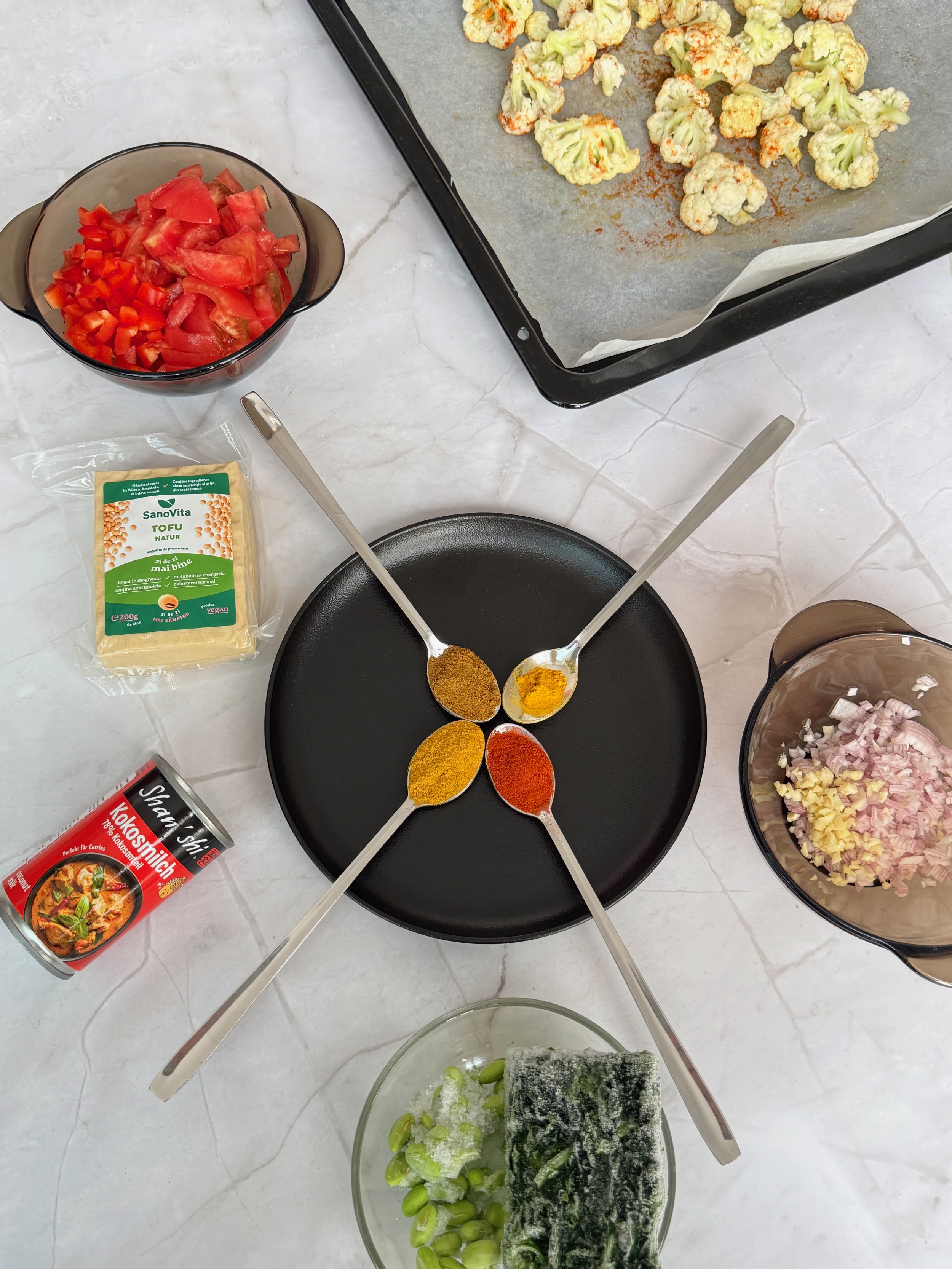
- Cauliflower: The star of the show. Broken into small florets and roasted in the oven for a crunchy texture, it absorbs the sauce perfectly and adds a hearty consistency, successfully replacing meat.
- Tofu: The main protein source in this recipe. Use plain tofu, cubed, which will beautifully infuse with the rich spice blend.
- Coconut milk: The liquid base of the recipe. It delivers that rich creaminess typical of a Thai curry and balances out the spicy notes. My go-to is Shan’shi Coconut Milk (165 ml).
- Tomatoes: They add acidity and a vibrant color.
- Bell pepper or Kapia pepper: Brings extra color, texture, and a subtle sweetness.
- Edamame, lentils, or chickpeas (or whatever you prefer): Added for extra fiber and texture.
- Spices (curry, turmeric, garam masala, sweet paprika): The secret to that authentic flavor. To ensure the spices bloom correctly and release their full aroma, I toast them in oil for 15-20 seconds before adding the tomatoes to lower the heat and prevent burning. I add the garam masala towards the very end to keep its fragrant flavor intact.
- Spinach leaves (fresh or frozen): Tossed in right at the end, during the last minutes of cooking. It adds a pop of vibrant green and a healthy dose of vitamins.
- Onion and garlic: The essential aromatic base for any flavorful stew 😉.
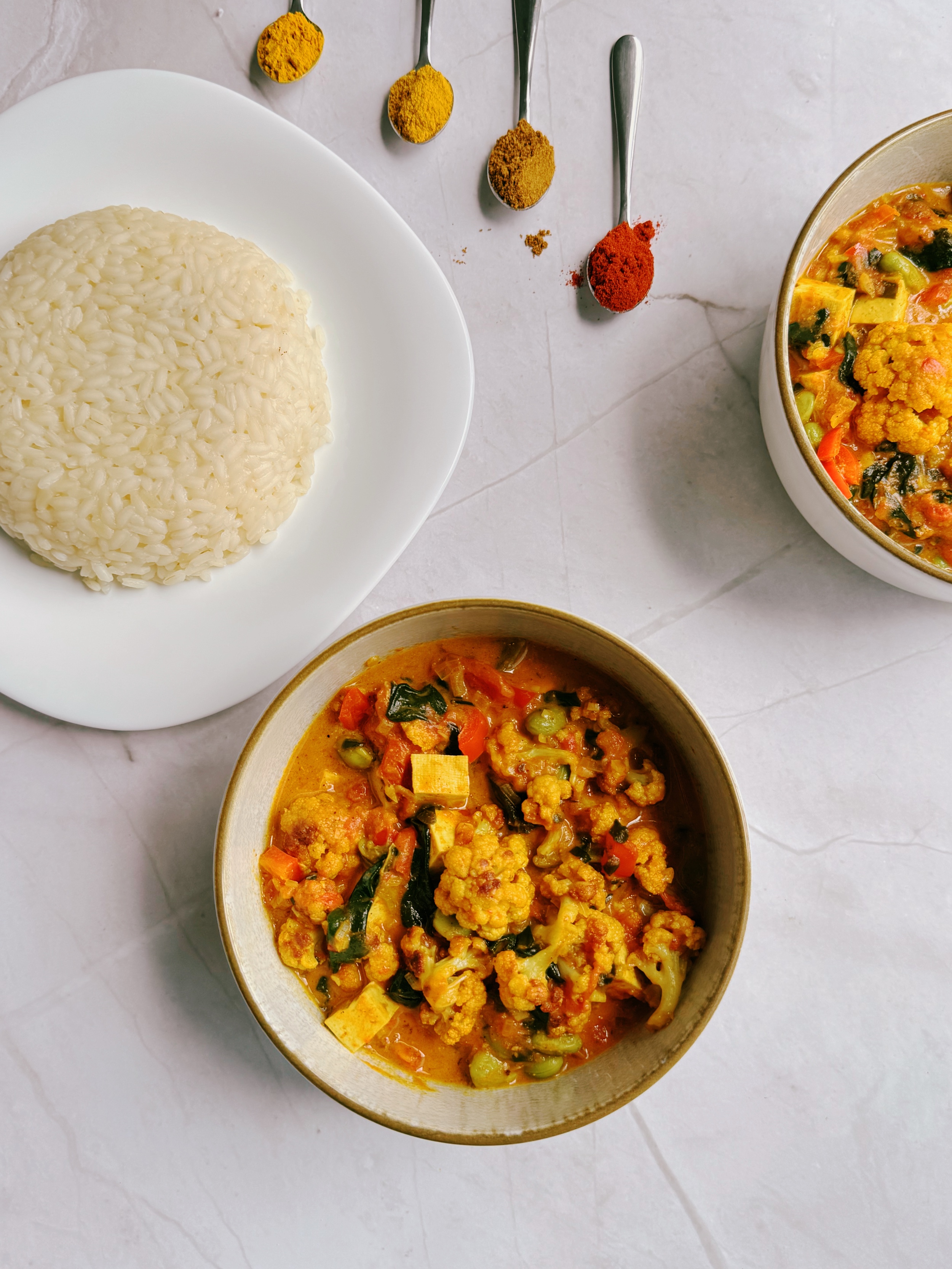
This dish is perfect for those cold, rainy days, or simply whenever you’re hit with nostalgia for the intense flavors of exotic vacations 🏝️.
If you want to pair it with an equally exotic dessert, try my recipe for Thai Tea Cake with Coconut Cream 😋.

Vegetarian Cauliflower and Tofu Curry
2
servings20
minutes50
minutes450
kcalIngredients
1/3 cauliflower (approx. 300g)
3 medium-sized tomatoes, or 6-7 cherry tomatoes
1 onion
2 garlic cloves
1/2 bell pepper or Kapia pepper
2 tsp curry powder
1/4 tsp turmeric
1 tsp garam masala
1 tsp sweet paprika
100g plain tofu (tofu natur)
1 can (165ml) coconut milk
A handful of spinach leaves (frozen works too, but use whole leaves, not chopped)
50g frozen edamame
Salt, pepper, and a pinch of chili (if you prefer it spicier)
2 tbsp coconut oil or olive oil
Directions
- Roast the cauliflower: Break one-third of the cauliflower into small florets, wash thoroughly, and pat dry with a paper towel. Place the florets on a baking sheet, season with salt, pepper, and a pinch of sweet paprika, and drizzle with a little olive oil. Roast in a preheated oven at 180°C (350°F) with the fan on for about 20 minutes, until the cauliflower is lightly browned and tender.
- Blanch the tomatoes: Place the 3 medium tomatoes (or 7 cherry tomatoes) in boiling water for about one minute (or less, depending on the variety), then remove them and easily peel off the skin.
- Build the sauce base: Heat the oil in a deep pan or skillet and sauté the finely chopped onion and 2 minced garlic cloves. Once the onion is soft and translucent, add the curry powder, sweet paprika, and turmeric, stirring constantly for 15-20 seconds to let the spices bloom. Immediately add the peeled, chopped tomatoes and the finely diced half of a bell pepper. If the tomatoes aren’t juicy enough, splash in a little water. Let the sauce simmer over medium-low heat for 20-30 minutes. Season with salt, pepper, and a little chili to taste. If the tomatoes are too acidic, balance the flavors with a pinch of sugar.
- Add the greens: Stir in the 50g of frozen edamame and the handful of spinach leaves. If you are using frozen spinach, let it simmer for 5-10 minutes so it defrosts and cooks through completely.
- Make it creamy: Add the garam masala and the cubed plain tofu to the pan, then pour in the can of coconut milk. Stir gently to combine and let it simmer for another 5 minutes.
- Combine everything: Toss the roasted cauliflower into the pan. Let everything simmer together for one last 5 minutes, allowing the flavors to meld beautifully and the cauliflower to absorb the rich curry sauce.
- Final touch and serving: Taste and adjust the seasoning with more salt if needed, or add chili flakes if you prefer a spicier kick. Serve the curry warm, either on its own as a hearty stew or alongside a side of simple boiled rice.