Every time I make pizza at home, I remember my first attempt. The crust was a disaster: I forgot to add the oil, and all I got from flour and water was something you could almost break your teeth on. I knew *le husband liked spicy pizza, so I used chili sauce as the base. It was fiery. It was awful.
Still, *le husband braved a few bites. To this day, he tells our friends about the ordeal he went through before I became a decent cook. 😀
Over time, I kept adapting the recipe until I got a crust that makes both of us happy: somewhere between thin and crispy, the way he likes it, and fluffy, the way I like it. In this recipe, the dough is the star. It is kneaded by hand, left to rise, and baked until the bottom is cooked through, too.
Why You’ll Love This Recipe
The crust is made without any special equipment. I don’t need a stand mixer: I knead the dough by hand and pay attention to how it changes as I work. That’s how I can tell whether it needs a little more oil and whether it has started to pull away from the sides of the bowl and my hands.
This recipe is for a 30 × 40 cm baking tray and uses dry yeast. The dough rises for about 30–45 minutes, and the cue I look for is that it has doubled in size. You don’t have to guess whether enough time has passed just by watching the clock; check how the dough looks, too.
The crust is a simple base you can pair with your favorite toppings. You can go for a classic combination, use a few ingredients you have in the fridge, or keep the topping simple. There’s no required combination here; the dough is the part worth paying close attention to.

How to Check the Dough’s Consistency
At first, the ingredients come together into a dough you can work by hand. As you knead, check whether it pulls away from the sides of the bowl and your hands. That’s the practical cue I use. If it is still sticking, add a little more oil, gradually.
Don’t add all the extra oil at once. Add a little at a time and see how the dough responds. The goal is to reach the consistency described, rather than to use a fixed extra amount. The recipe card lists the base amount and notes that you can add more if needed.
The water should be warm, but not too hot. It’s an easy detail to overlook when you’re in a hurry, so check it before adding it to the bowl.
Kneading by hand takes about 15–20 minutes. Use that as a guide, but don’t stop just because the timer goes off if the dough is still sticking. At the same time, there’s no need to keep kneading once it has reached the consistency you’re looking for. Work the dough until it behaves as described in the recipe.
Proofing and Baking
After kneading, cover the bowl with a clean kitchen towel and leave it in a warm spot. For this recipe, proofing takes about 30–45 minutes, until the dough has doubled in size. The time is approximate, so look at the dough’s volume.
Once it has risen, the dough is ready to be stretched into the tray and baked. There’s no need to make this step overly precise: the visual cue is enough. If it hasn’t doubled in size yet, give it a little longer and check again.
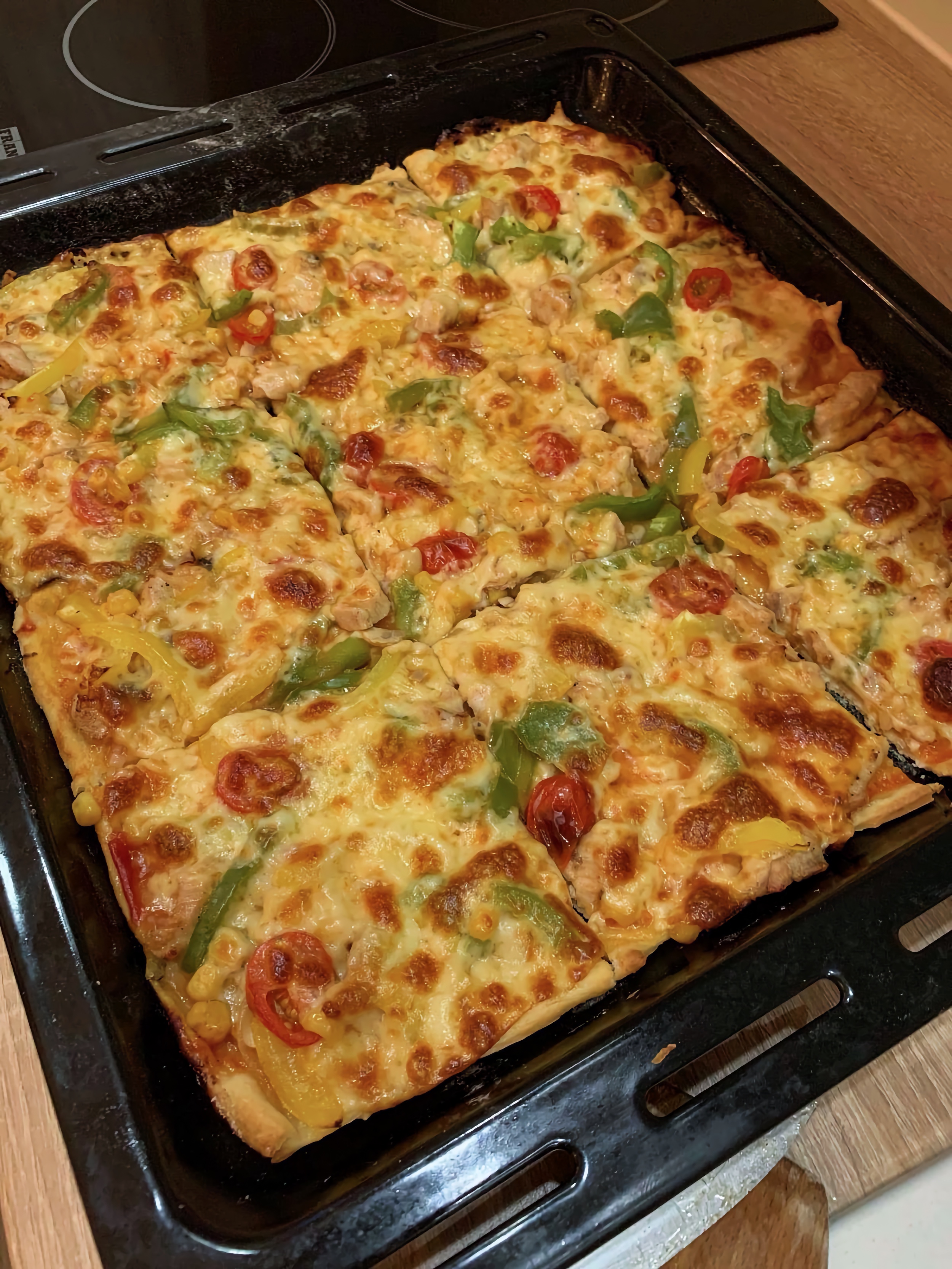
Bake the pizza at 220°C for 20–30 minutes. Ovens can vary, so treat this as a time range rather than a promise that the crust will be ready at exactly the 20-minute mark. Near the end, check the bottom: carefully lift the crust with a wooden spatula and see if it is cooked through. If it isn’t, return the pizza to the oven and check again.
Checking the base matters because the top can look done before the crust is baked through. Don’t rely only on the color of the toppings. Carefully lift the edge and look underneath.
More Dough Recipes
If you enjoy working with homemade dough, you might like these recipes, too. One is another pizza crust option, while the others take dough in a different direction.
Stovetop English Muffins — another yeasted dough recipe, for when you feel like kneading something different.
High-Protein Pizza with Dry-Cured Pork Tenderloin and Arugula — another pizza recipe from the blog, with a no-rise cottage cheese crust.
High-Protein Cottage Cheese Flatbreads — an alternative to classic pizza dough, made with cottage cheese and oat flour.

Homemade Pizza – Recipe with Yeasted Dough
Homemade pizza dough, kneaded by hand, left to rise, and baked in a 30 × 40 cm tray. Add your favorite toppings.
4
servings30
minutes30
minutes45
minutes1
hour45
minutesIngredients
- For the crust
2 cups flour
½ teaspoon salt
7 g dry yeast
½ cup warm water, but not too hot
½ cup sunflower oil, plus a little more if the dough doesn’t pull away from the bowl or your hands
- For the topping, as an example
A few slices of turkey breast
Corn
Cherry tomatoes
Capia peppers
Onion
Cheese
Directions
- Add the flour, dry yeast, and salt to a bowl.
- Add the water and mix gently, then gradually work in the sunflower oil.
- Knead the dough by hand for about 15–20 minutes. If it doesn’t pull away from the sides of the bowl or your hands, add a little more oil.
- Cover the bowl with a clean kitchen towel and leave the dough to rise for 30–45 minutes, until it has doubled in size.
- Stretch the dough into a 30 × 40 cm (aprox. 12 × 16 inches) baking tray and add your chosen toppings.
- Bake at 220°C (425°F) for 20–30 minutes. Near the end, carefully lift the crust with a wooden spatula and check whether the bottom is cooked through.