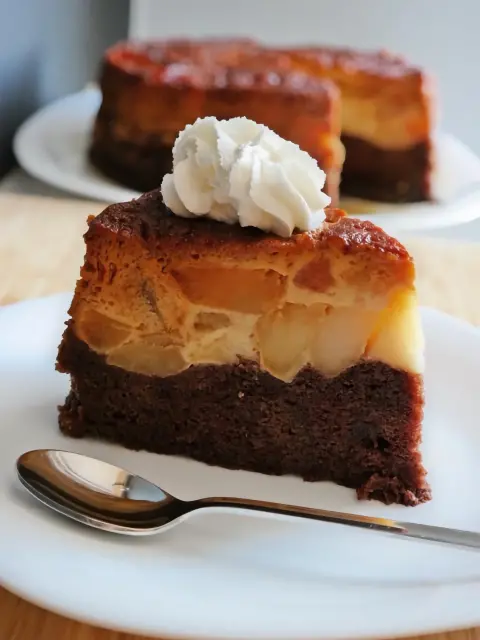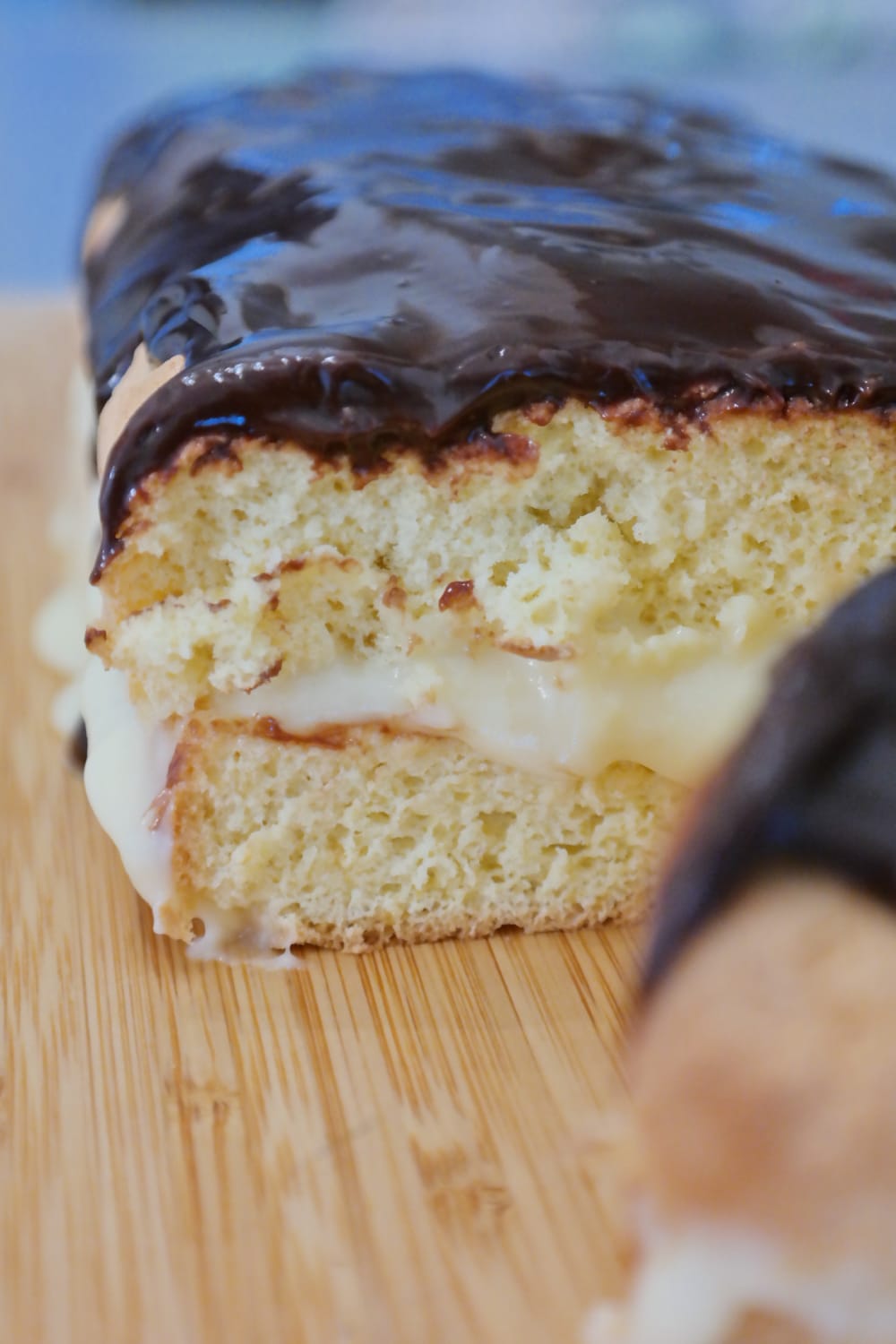
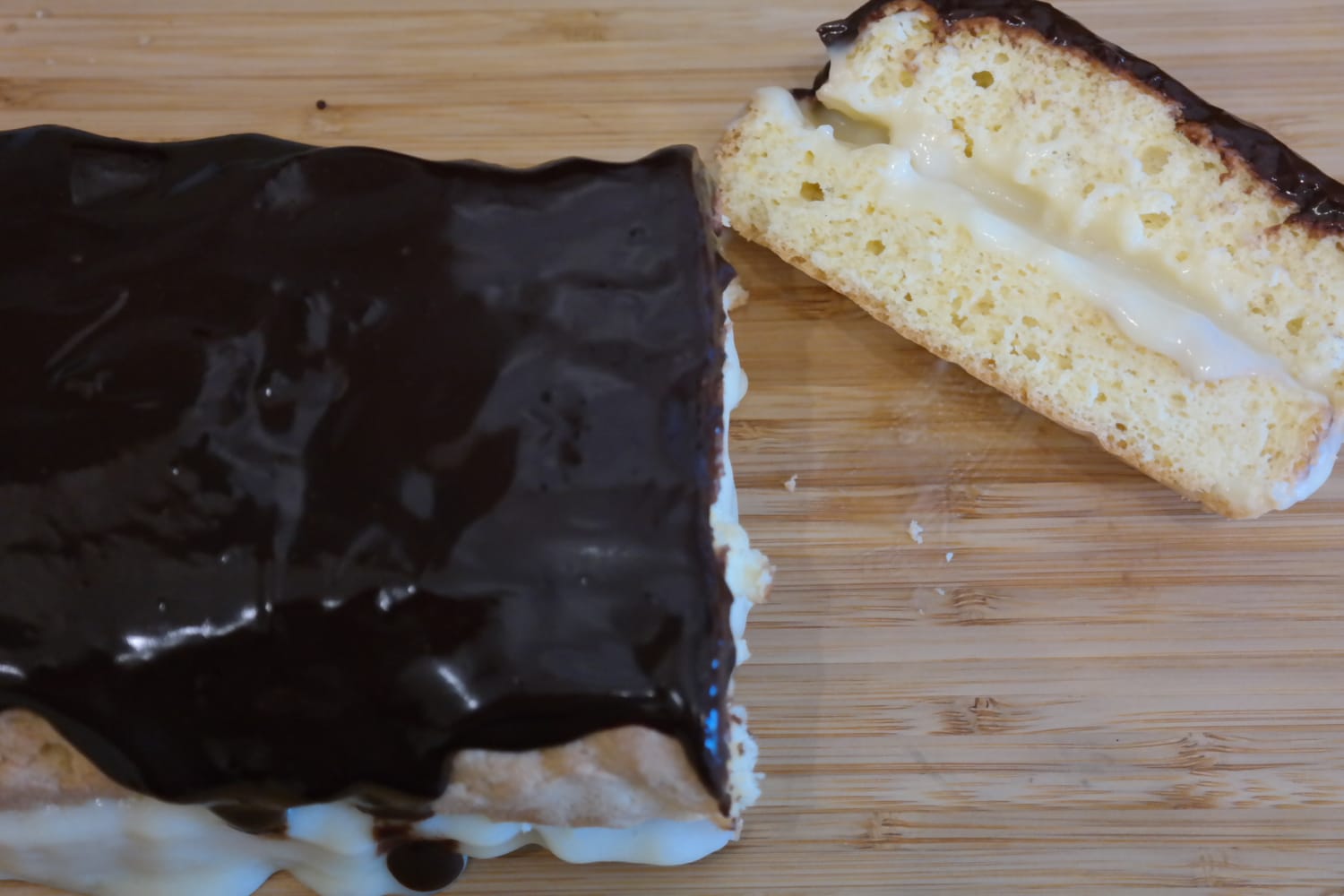
When one of us wants vanilla pudding and the other wants sponge cake, I try to negotiate a little. Somehow, the compromise ends up involving chocolate—without the other side noticing exactly when it entered the equation. That’s how this cake with fluffy sponge, vanilla cream and chocolate ganache came about.
“Doughnut” or “flatbread” were the names *le husband quickly gave it (though always paired with the word “tasty”). It was a big hit. It was supposed to spend at least half an hour in the fridge before serving. In our case, it didn’t even make it five minutes. I did manage to take two photos before the hungry predators got to it.
This is a simple homemade dessert with three textures that work well together: airy sponge, rich vanilla cream and a layer of chocolate that firms up slightly when chilled. It isn’t a complicated patisserie-style cake, and it doesn’t pretend to be one. It’s the kind of dessert to make when you’re craving something creamy but don’t want to spend the whole day assembling a layer cake.
How This Cake Is Similar to Boston Cream Pie
This cake has the same three-part combination that makes Boston Cream Pie so recognizable: a light sponge, vanilla cream in the middle and chocolate on top. Boston Cream Pie is actually a cake, despite the name, and traditional versions also pair sponge cake with pastry cream and a chocolate topping.
This recipe is a simpler, homemade take on that flavor combination. It uses a loaf-style sponge, a vanilla pudding cream and chocolate ganache, so I’d describe it as Boston Cream Pie-inspired rather than a classic Boston Cream Pie.
Why You’ll Love This Recipe
Vanilla and chocolate are a familiar combination, but each part of this cake has a clear role. The light sponge holds the cream, the pudding brings a rich vanilla flavor, and the ganache finishes everything with a deeper chocolate note. A slice feels indulgent without turning into a dessert with lots of layers and elaborate decorations.
The recipe uses everyday ingredients and doesn’t require any special pans. The sponge is baked in a loaf pan, then sliced in half and filled. The ganache goes on top; it can be left smooth or swirled with the back of a spoon. Perfectly neat edges aren’t necessary. That homemade look is part of its charm.
I also like that you can adjust the sweetness. If you prefer less-sweet desserts, you can use a little less sugar or choose chocolate with a higher cocoa percentage. The recipe card below reflects the quantities in the published Romanian version.
What Each Layer Should Be Like
The sponge is similar to a very airy loaf cake—more precisely, a sponge cake. For that texture, the egg whites beaten with sugar need to hold their shape, and the flour should be folded in gently rather than mixed vigorously. If too much air is knocked out of the batter, the sponge may turn out denser. Once baked, it needs to cool before slicing; a warm sponge can crumble and soften the filling.
The vanilla cream thickens on the stove and becomes firmer as it cools. For the smoothest result, add the milk gradually while whisking the flour and sugar, then keep stirring as the cream thickens. This helps prevent lumps from forming.
The ganache should be spreadable but not runny like a thin sauce. The amount of cream can be adjusted to get the consistency you want. Add it gradually and stop when the ganache falls from a spoon in thick ribbons. It will firm up more as it cools.
Helpful Tips
Let each component cool before assembling the cake. Warm sponge can melt the cream, while warm cream can soften the sponge.
Spread the cream almost to the edges. The top layer of sponge will distribute the filling; avoid pressing down too hard, or the cream may squeeze out at the sides.
Let the ganache cool before spreading it. If it is very hot, it may slide off the cake and warm the cream underneath.
Chill the cake before serving. The published recipe recommends at least 30 minutes in the fridge. A longer chill helps the cream set and makes the cake easier to slice.
Wipe the knife between cuts for neater slices. The cream and ganache are less likely to drag across the next piece.
Serving and Storage
Serve the cake chilled and cut it with a clean knife. It’s lovely without any extra decoration; the chocolate layer already gives it plenty of personality.
Keep the cake covered in the refrigerator because the filling contains milk and egg yolks. For a softer texture, take the slices out shortly before serving so they aren’t completely cold.
Frequently Asked Questions
Why can the vanilla cream turn lumpy?
The flour and sugar should be mixed with the milk gradually while whisking. If all the milk is poured in at once, the flour may not hydrate evenly. Constant whisking, especially as the cream begins to thicken, helps create a smooth texture.
How do I keep the egg yolks from curdling in the cream?
Before adding them to the saucepan, whisk a little hot cream into the yolks gradually, in a thin stream. Then pour the mixture back into the saucepan while stirring continuously. This warms the yolks gradually.
How long does the cake keep?
Keep it covered in the refrigerator and eat it within 1–2 days.
More Recipes You Might Like
If you enjoy desserts where cream and chocolate work together, here are a few more recipes from the blog in the same spirit—some layered, some made with a soft dough or sponge.
Milk Cream and Nutella Layer Cake — Cocoa sponge layers, milk cream and a Nutella glaze make this a good choice when you’re in the mood for a more elaborate chocolate dessert.
Coffee Cake with White Chocolate Cream — Coffee and cocoa cake are topped with a smooth white chocolate cream. The coffee and dark chocolate balance the sweeter topping.
Pain Suisse with Vanilla Pastry Cream and Chocolate — These aren’t cake slices but soft pastries filled with vanilla pastry cream and chocolate. Worth a look if the cream-and-chocolate combination is what caught your attention here.

Vanilla Pudding Cake with Chocolate Ganache Recipe
8
slices25
minutes35
minutes330
kcalA homemade cake with fluffy sponge, vanilla pudding cream and chocolate ganache.
Ingredients
- For the vanilla cream
4 tablespoons all-purpose flour
5 tablespoons sugar
2 cups milk
2 egg yolks
50 g butter
1 teaspoon vanilla extract
- For the sponge
2 whole eggs
2 egg whites
4 tablespoons sugar
4 tablespoons all-purpose flour
A pinch of baking powder
A few drops of vanilla essence
- For the ganache
100 g baking chocolate, 52% cocoa
1 tablespoon butter
50 ml heavy cream
Directions
- Vanilla Cream
- Whisk the flour and sugar together in a saucepan. Gradually pour in the milk, whisking to prevent lumps.
- Place the saucepan over low heat and stir continuously until the mixture begins to thicken.
- Whisk the egg yolks in a bowl. Gradually whisk a few spoonfuls of the hot cream into the yolks, then pour the mixture back into the saucepan.
- Cook the cream over low heat for another 5–10 minutes, stirring continuously.
- Remove the saucepan from the heat. Add the vanilla extract and butter, then stir until the butter has melted and is fully incorporated. Leave the cream to cool.
- Sponge
- Preheat the oven to 170°C (340°F). Line a loaf pan with parchment paper.
- Beat the 4 egg whites with the sugar until a firm foam forms.
- Lightly beat the egg yolks, then fold them into the egg whites.
- Add the flour, baking powder and vanilla essence. Mix gently, just until combined.
- Pour the batter into the prepared pan and bake for about 35 minutes. Check the center with a toothpick; it should come out clean.
- Remove the sponge from the pan and leave it to cool completely.
- Chocolate Ganache
- Place the chocolate, butter and heavy cream in a small saucepan.
- Heat over very low heat, stirring until the chocolate has melted and the mixture is smooth and creamy. If needed, add a little more cream gradually until the desired consistency is reached.
- Assembly
- Slice the cooled sponge horizontally into two layers.
- Spread the vanilla cream between the layers and cover the top with ganache.
- Refrigerate the cake for at least 30 minutes before serving so the cream can set and the cake is easier to slice.
Note
- Nutrition information is an estimate and may vary depending on the ingredients used and serving size.