I have always been a little hesitant to try making a Pavlova recipe. That is because my meringues never turned out the way they should. They were either too chewy, they would turn yellow, or they simply did not have that beautiful crisp texture you expect from a bakery-style Pavlova.
Ever since I got my KitchenAid, I have started to feel more confident trying all kinds of recipes that I used to consider “too intimidating”. 😁
I have to admit that the hours spent watching Chefi la cutite 👩🍳 helped me as well. I picked up a few tips and tricks along the way. 💡 That is also how I came across Alain Ducasse’s meringue recipe, which I used as my starting point.
From what I have learned, one of the secrets is the ratio between the ingredients: the amount of egg whites should be equal to the amount of granulated sugar and powdered sugar. Everything else comes down to technique, temperature and, of course, patience. Because Pavlova is not the kind of dessert you simply put in the oven and forget about.
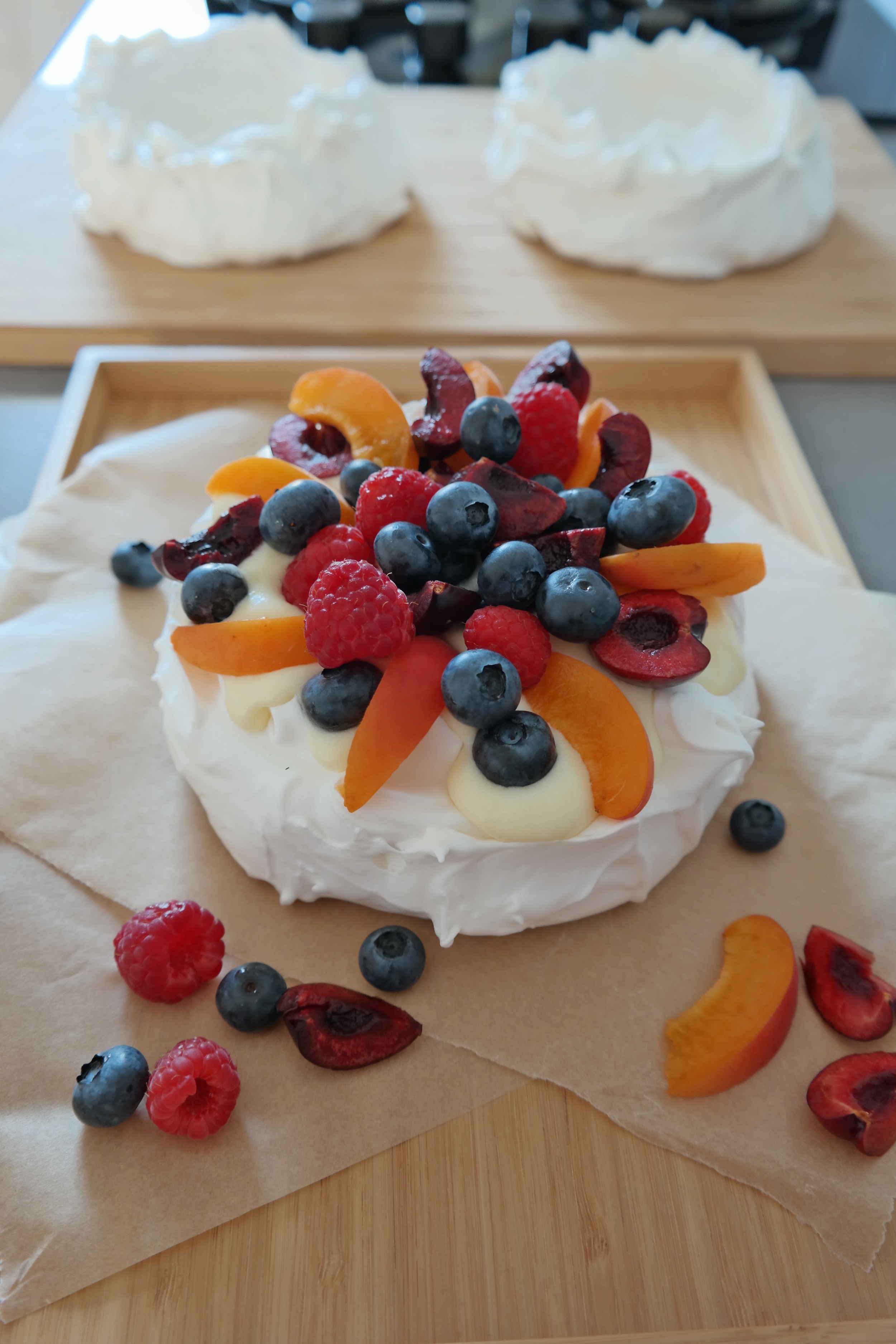
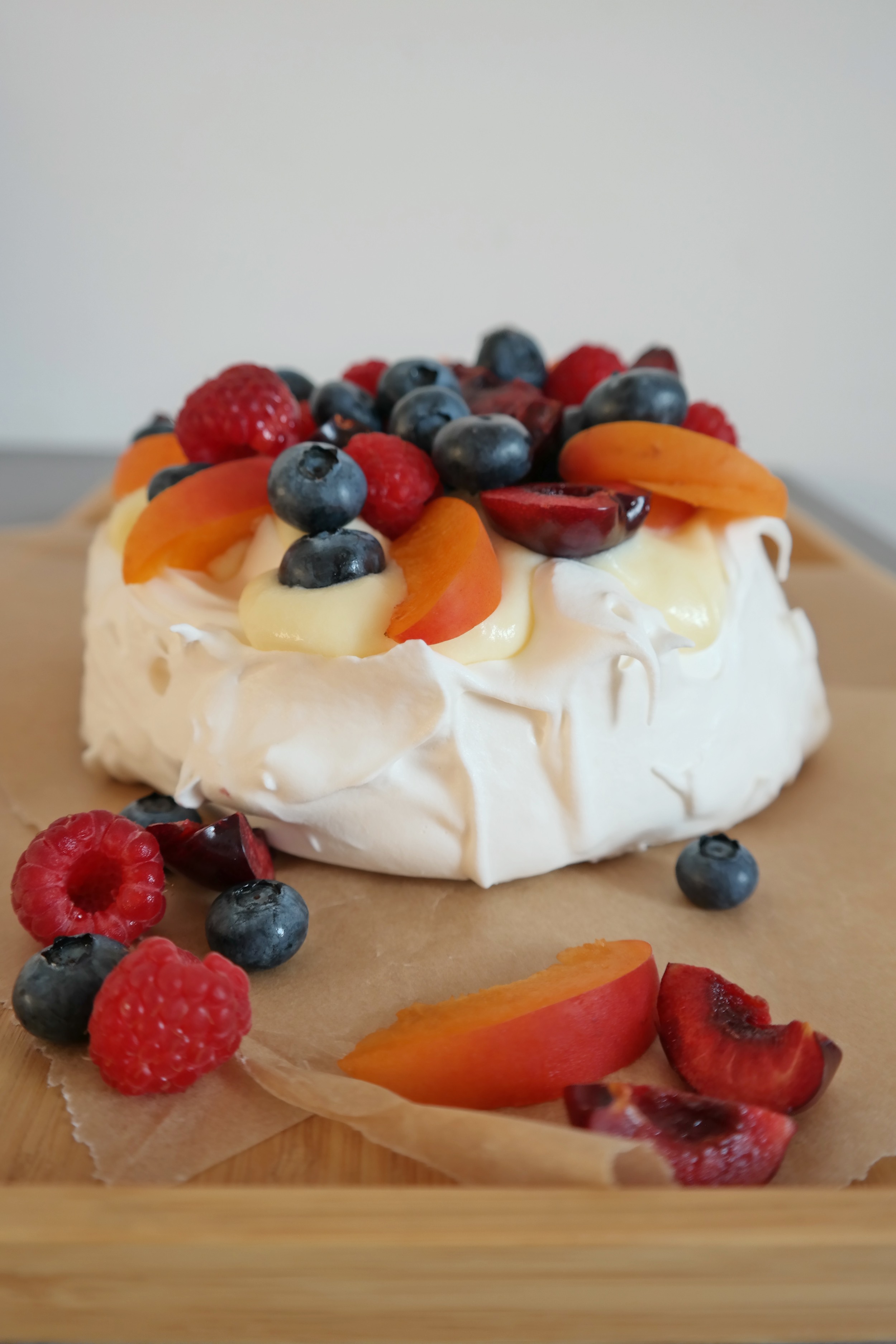
This time, I put everything I had learned into practice and finally achieved exactly what I was hoping for: a beautiful white meringue, crisp on the outside and perfectly baked. It looked just like the ones you see in a pastry shop, except this one was made by me, which automatically made it even better. 😁
And yes, I am convinced that my KitchenAid mixer also deserves some credit. I noticed quite a big difference between egg whites whipped with a regular mixer and those whipped with the KitchenAid.
For the filling, I did not go with the classic simple whipped cream version. I wanted a softer cream, with a consistency similar to thick sour cream, something that would balance the crisp texture of the meringue.
I really loved this combination. Next time, though, I plan to try a version with cream and a fruit sauce as well. Because, obviously, a good recipe needs to be tested more than once. Strictly for scientific purposes. 😂
What makes a perfect Pavlova?
For me, a successful Pavlova means a white, crisp and perfectly dried meringue. I do not want it to be chewy or moist on the inside.
Once the cream filling and fruit are added, the meringue naturally starts to soften as it absorbs moisture from the filling. That is why I prefer to assemble the Pavlova as close as possible to serving time, so I can keep as much as possible of that beautiful contrast between the crisp meringue, smooth filling and fresh fruit.
I made three large meringue layers, each approximately 18 cm (about 7 inches) in diameter, which I filled with the cream filling and topped with fresh fruit.
Helpful Tips
- Make sure no egg yolk gets into the egg whites. Even a small amount of fat can affect how well the egg whites whip.
- Do not rush when adding the sugar. The egg whites need to be properly whipped, and the sugar should be completely dissolved before moving on to the next step.
- Do not open the oven door while baking. Pavlova needs a constant temperature, and sudden temperature changes can cause the meringue to crack or collapse.
- Do not worry if your Pavlova cracks slightly. It is a delicate dessert, and the cream filling and fruit will cover any imperfections anyway. 😉
- Add the filling and fruit as close to serving time as possible. The moisture from the filling and fruit will gradually soften the meringue, so if you want to keep that contrast between crisp and creamy, avoid assembling the Pavlova too far in advance.
What fruits can you use to decorate Pavlova?
There is really no strict rule here.
For a classic Pavlova, you can use berries, strawberries, kiwi or passion fruit. If you want something fresher and less sweet, slightly tart fruits are always my favorite choice.
You can also create different combinations depending on the season. During summer, I would go for strawberries and mixed berries, while for a more exotic version, I would combine mango, passion fruit and kiwi.
In the end, that is one of the best things about Pavlova: the meringue base stays the same, but the topping can be changed every time.
Pavlova Recipe with Fresh Fruit and Vanilla Cream
12
servings30
minutes5
hours250
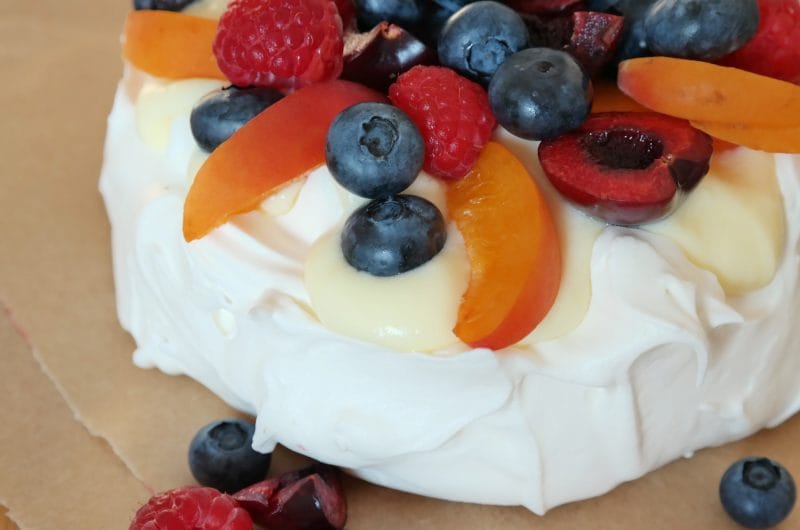
kcalA crisp and delicate Pavlova with smooth vanilla filling and fresh raspberries, blueberries, apricots and plums. A stunning dessert that is easier to make than it looks.
Ingredients
- For the meringue
150 g (5.3 oz) egg whites (from 5 medium eggs)
150 g (5.3 oz) granulated sugar
150 g (5.3 oz) powdered sugar
1 teaspoon lemon juice
1 teaspoon vanilla extract
- For the filling
200 ml (¾ cup) heavy cream
500 ml (2 cups) milk
2 heaping tablespoons cornstarch
1 egg yolk
1 tablespoon sugar
1 teaspoon vanilla extract
- For topping
Fresh fruit
Directions
- Meringue
- Place the egg whites in the mixer bowl and beat until they become very stiff.
- Add the granulated sugar, vanilla extract and lemon juice, and continue mixing until the sugar has completely dissolved.
- Finally, add the powdered sugar and gently fold it in using a spatula.
- Shape 3 large round meringues, approximately 18 cm (7 inches) in diameter. Use a spatula to shape them, slightly raising the edges and creating a small well in the center for the filling.
- Place the tray in the preheated oven at 90°C (194°F) and bake for 3 hours. After 3 hours, leave the tray in the oven for another 2 hours before opening the oven door.
- Vanilla filling
- Add the sugar and cornstarch to a small saucepan and mix.
- Gradually add the milk, stirring continuously.
- Place the saucepan over low heat and whisk until the mixture thickens and reaches a pudding-like consistency.
- Add the beaten egg yolk and continue stirring for another 1-2 minutes.
- Remove the filling from the heat and add the vanilla extract.
- Cover the filling with plastic wrap and let it cool completely.
- Add the heavy cream to the mixer bowl and whip until stiff peaks form.
- Gradually add the cooled filling, one tablespoon at a time, while mixing on medium speed, until fully incorporated.
- Assembly
- Make sure all components are completely cool before assembling.
- Fill the meringue layers with the vanilla filling.
- Top with fresh fruit.