This is the time of year when I start missing Thailand. As soon as it gets cold in Brașov, I think about how nice it was to walk around in the warmth and stop for something good to eat. I miss the bustle of our city break in Bangkok and the slower pace of our Phuket getaway. And of everything we ate in Thailand, mango sticky rice was our favorite dessert. So I thought I’d try making it at home. If I can’t go to Thailand, I’ll bring a little bit of Thailand to me. 😁
I figured the safest bet was to ask my Thai sister-in-law for the recipe. And guess what? She’d never made mango sticky rice at home. She told me you can get it pretty much anywhere there, it’s really good, and it costs so little that she’s never felt the need to make it herself.
She did help me choose the ingredients, though. That’s how I found out I needed Thai glutinous rice. Sushi rice gets sticky too, but it’s a different kind of rice. For the coconut milk, she told me to look for one without additives or sweeteners and gave me a few brands to look for. I found one of them in Romania and ordered both the rice and the coconut milk online. So a few days passed between “Let’s make mango sticky rice” and actually getting started. Luckily, the craving lasted longer than the delivery. 😆
Why You’ll Love This Mango Sticky Rice
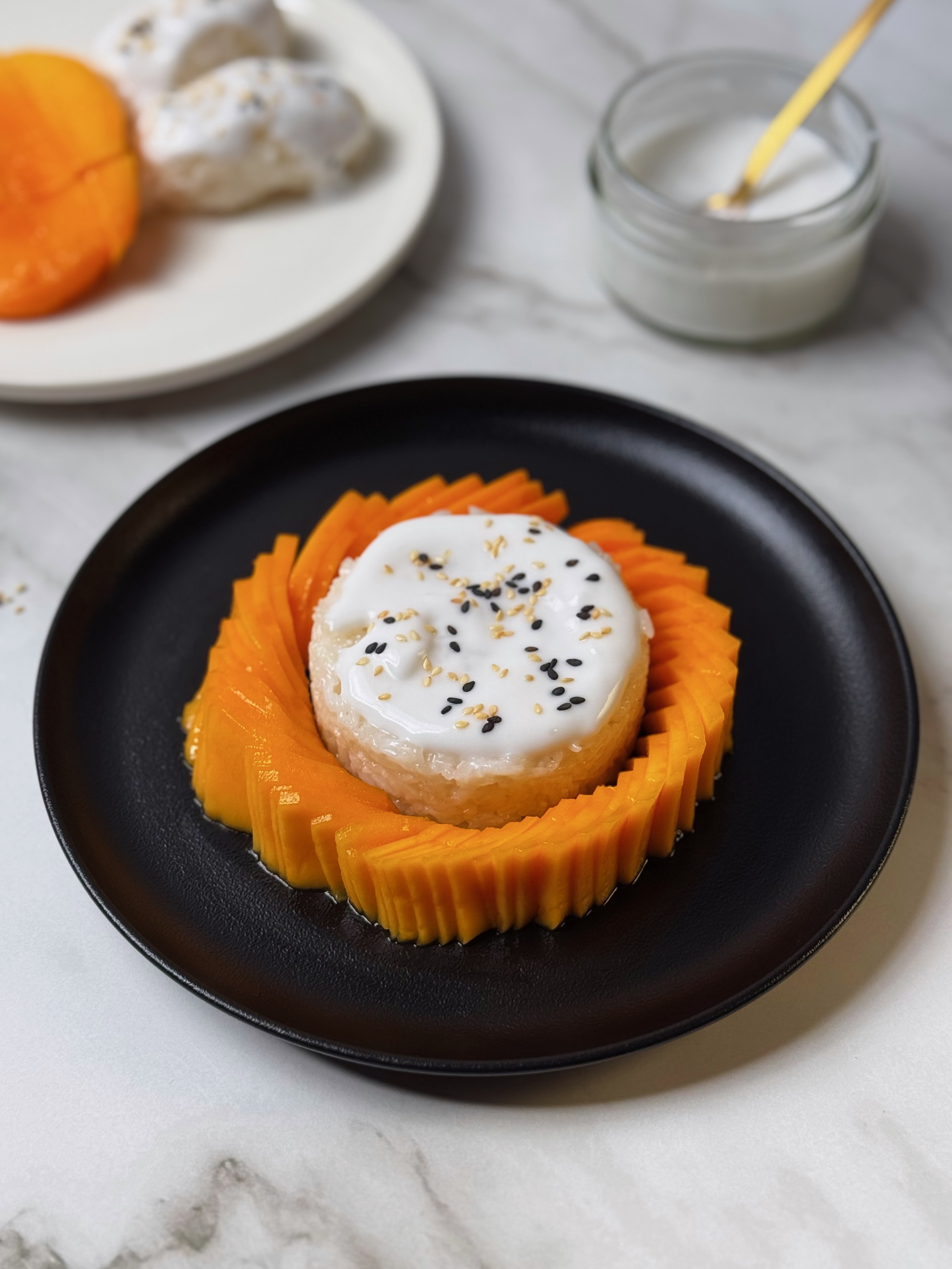
If you’re expecting something like rice pudding, you’re in for a surprise. The rice is soft and sticky, and it’s served with ripe mango and a slightly salty coconut sauce.
I like the sauce over the mango too, so I make plenty. I spoon some over the rice and put the rest in a little jar on the table so everyone can add as much as they like. 😁
The only thing you need to plan ahead for is soaking the rice. I’d put it in water the night before, then make the sauce while the rice steams the next day. If you pull the bag out of the cupboard when the craving hits, well, dessert is still a few hours away.
How I Steamed the Rice with a Sieve and a Saucepan
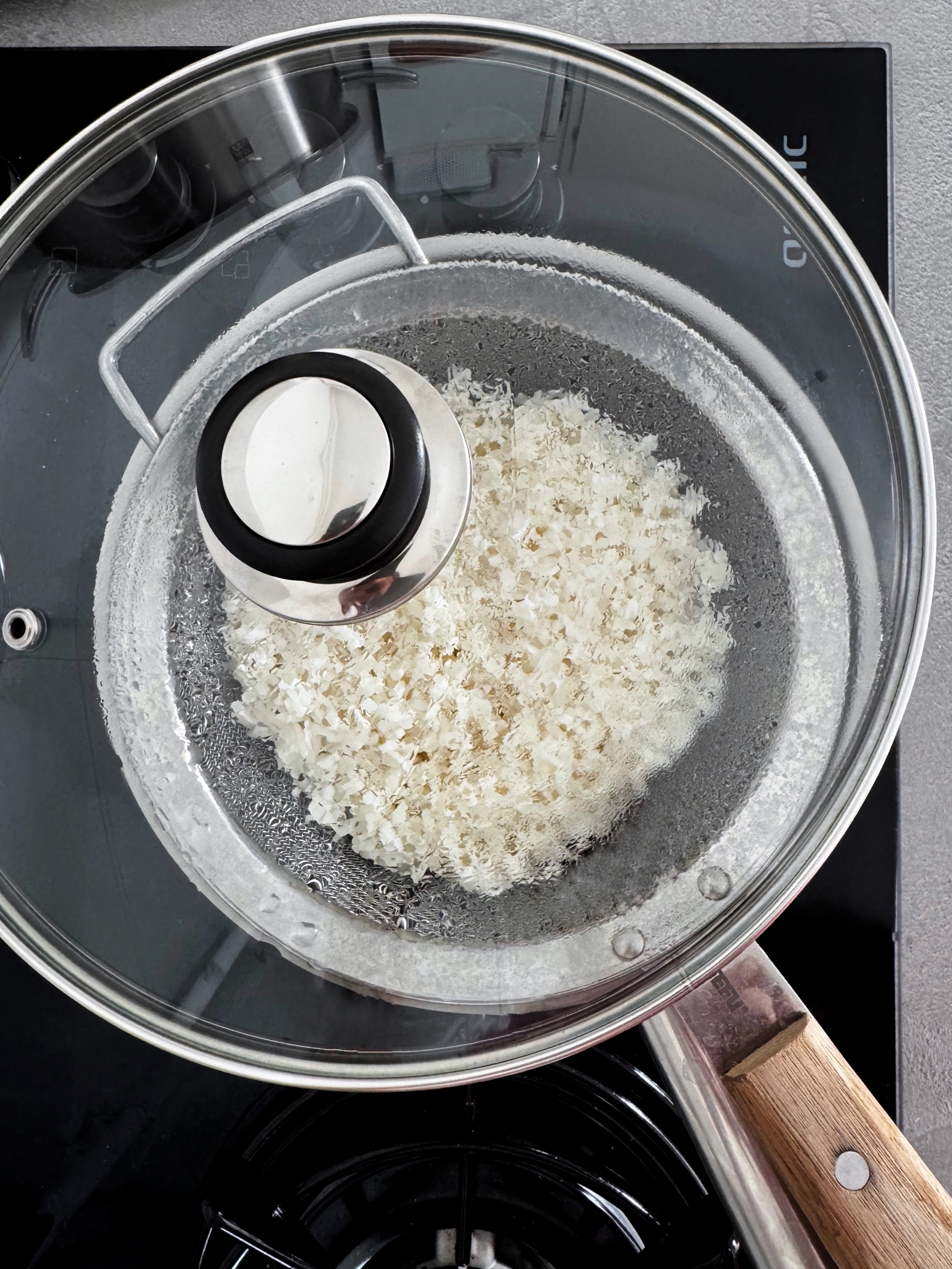
The traditional setup uses a bamboo steaming basket. I improvised with a metal sieve, a saucepan, and a lid. I set the sieve over the pan, leaving enough room underneath so the boiling water wouldn’t touch the rice. Then I put the lid on and let the steam do its thing.
I made mango sticky rice twice. The first time, I tasted the rice before turning off the heat and thought it was done. Glutinous rice feels different from the rice I usually cook, so it was only when I tasted the whole dessert on the plate that I realized some of the grains were still a little hard.
So I made the dessert again and changed how I steamed the rice. I turned the heat up a little to keep the water boiling steadily and get more steam going. I also gently stirred the rice in the sieve from time to time, bringing the grains at the bottom to the top and moving the ones on top down. This time, the rice was tender all the way through.
Keep an eye on the water in the pan. Mine boiled down while the rice was steaming, so I topped it up along the way. If you need to add more, use hot water to keep it boiling. The water level should stay below the sieve.
A Few Tips for Making Mango Sticky Rice
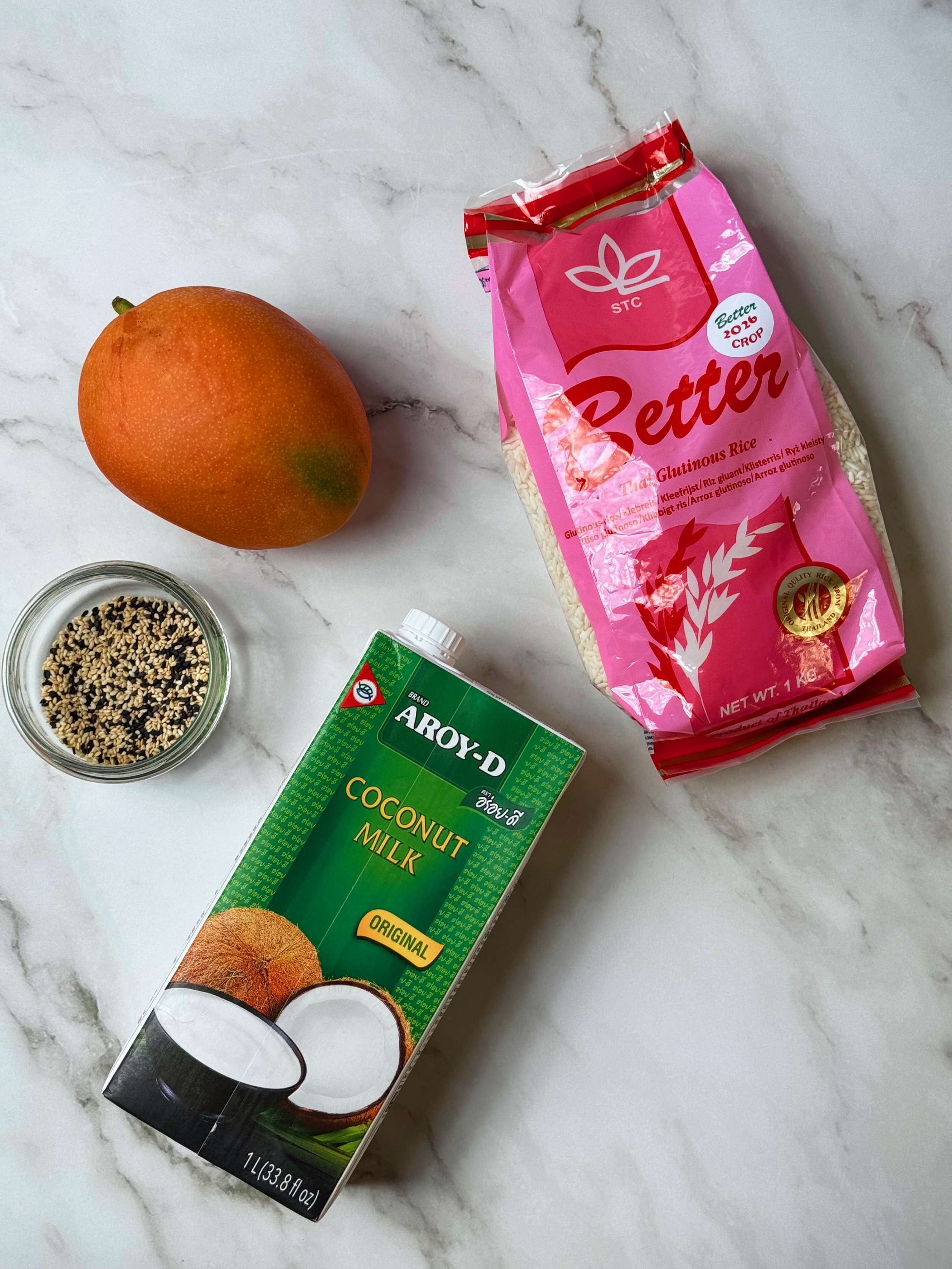
Look for “glutinous rice” on the package. I ordered Better Thai Glutinous Rice. If you’re shopping online and several types of rice come up, that’s the wording to look for. You might also see it sold as Thai sticky rice.
Choose plain, unsweetened coconut milk. My sister-in-law recommended a few brands, and Aroy-D was the one I found here. Her advice was to check the ingredients for additives and sweeteners. Give the carton a good shake before pouring, as the thicker coconut cream can separate from the liquid. I used the same coconut milk for the rice and the sauce.
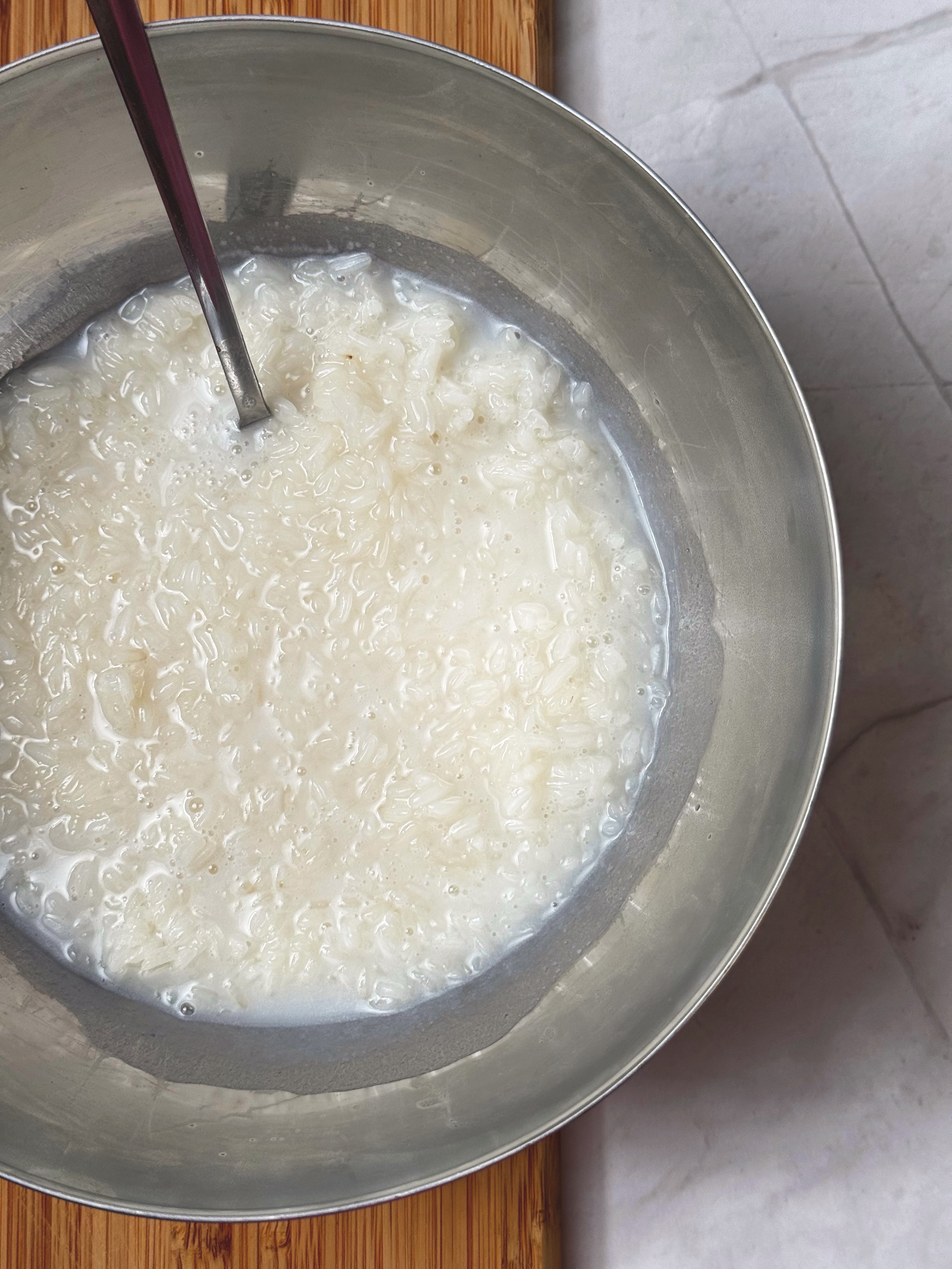
Taste a few grains before taking the rice off the heat. Try some from the middle of the sieve. If they’re still hard, give them a few more minutes. Pour the coconut milk mixture over the rice while it’s still hot. It might look like you’ve added too much liquid at first. Cover the bowl and give the rice time to soak it up before serving.
Pick a ripe, sweet mango with smooth, non-fibrous flesh. The variety matters here. The mango is the star of the plate, after all.
How I Served Mango Sticky Rice
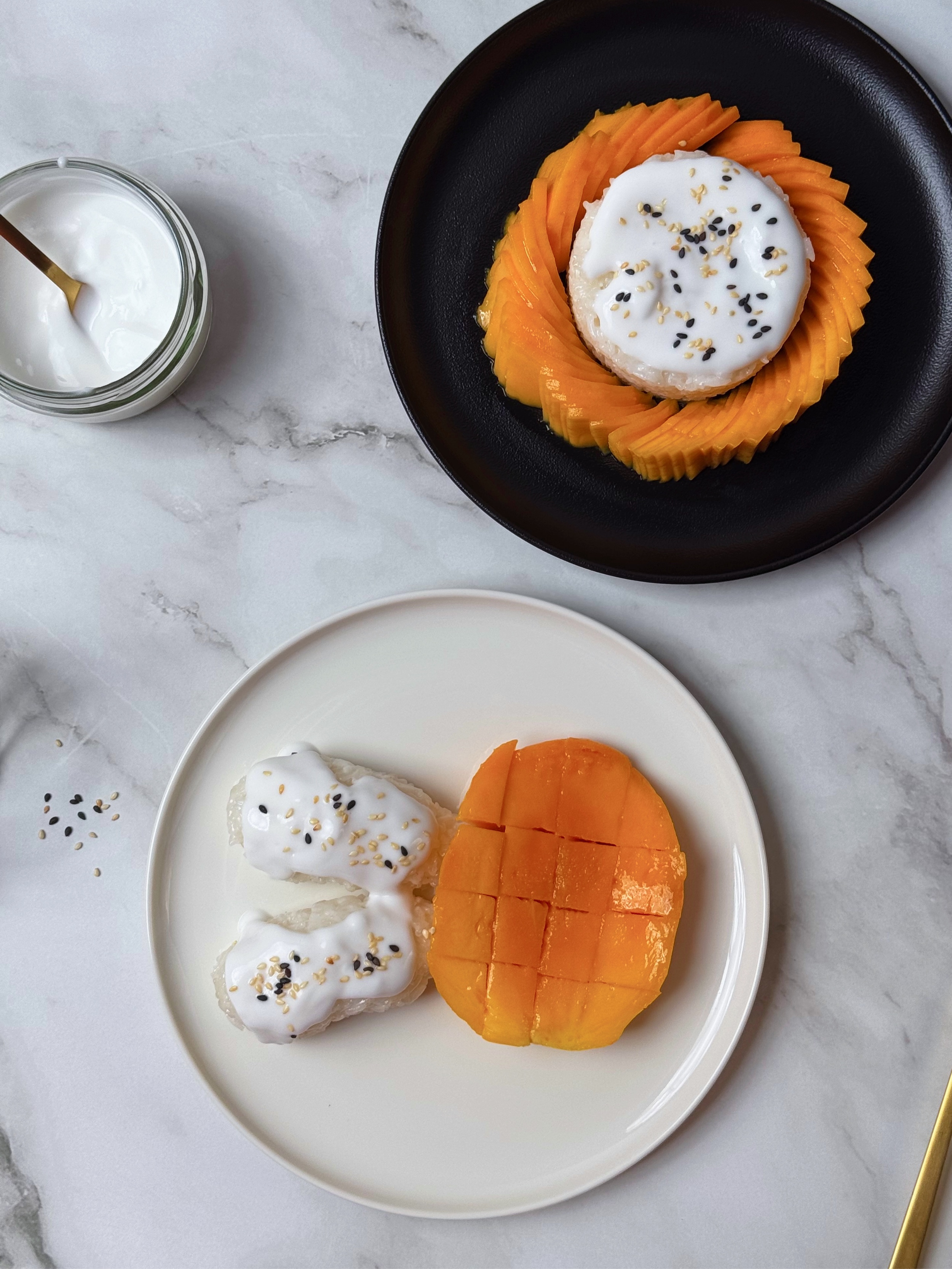
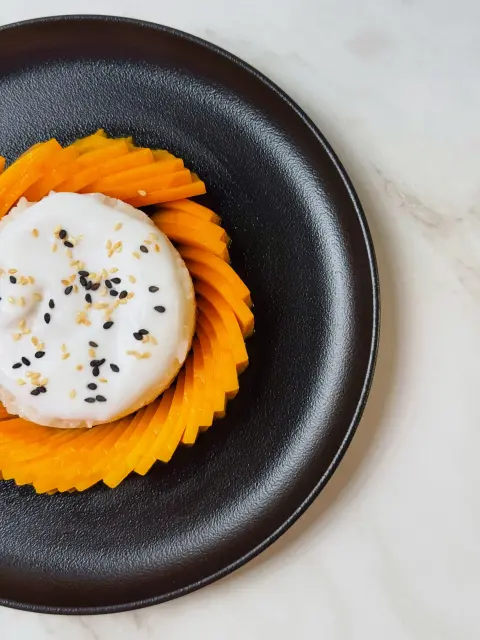
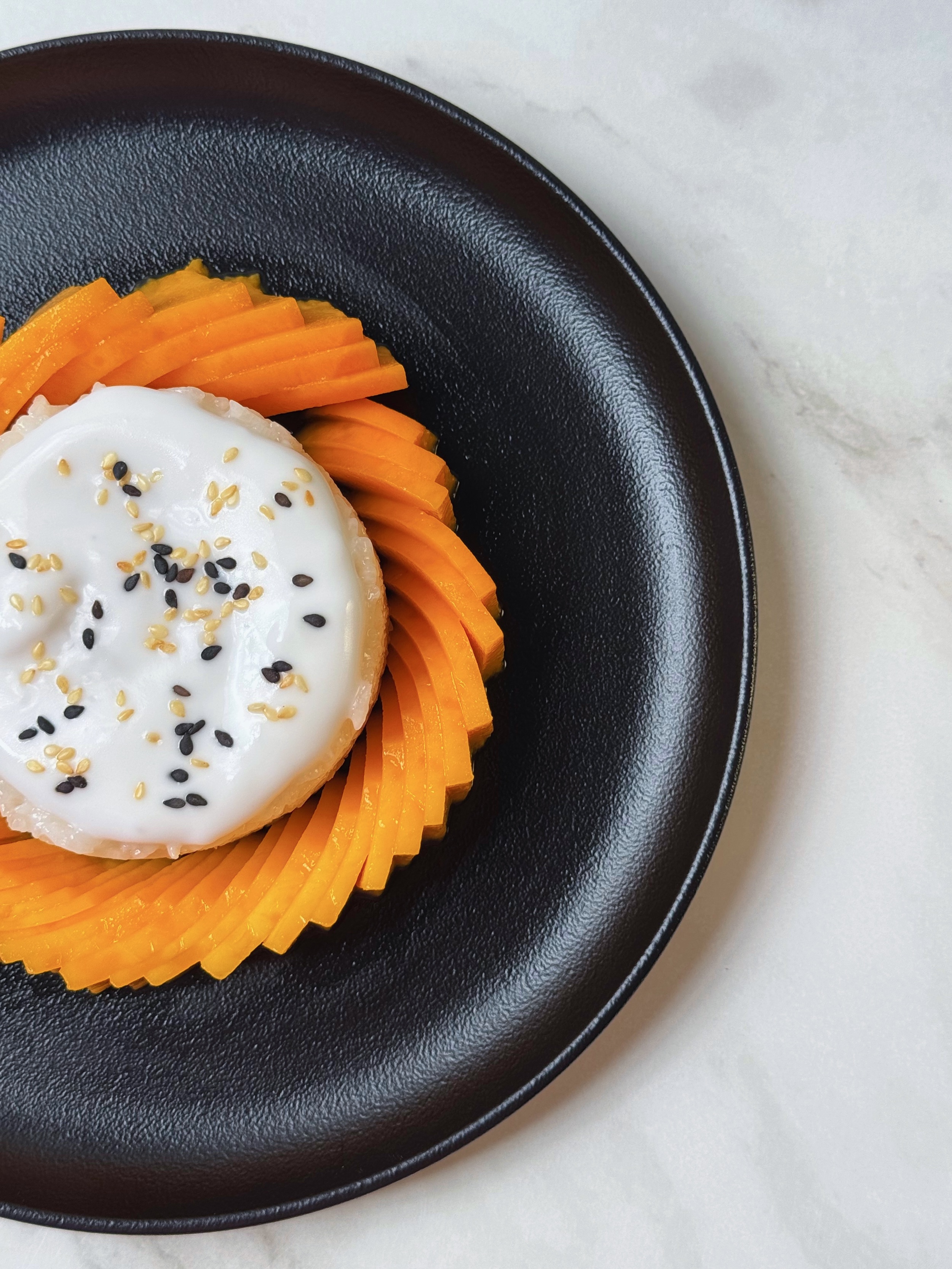
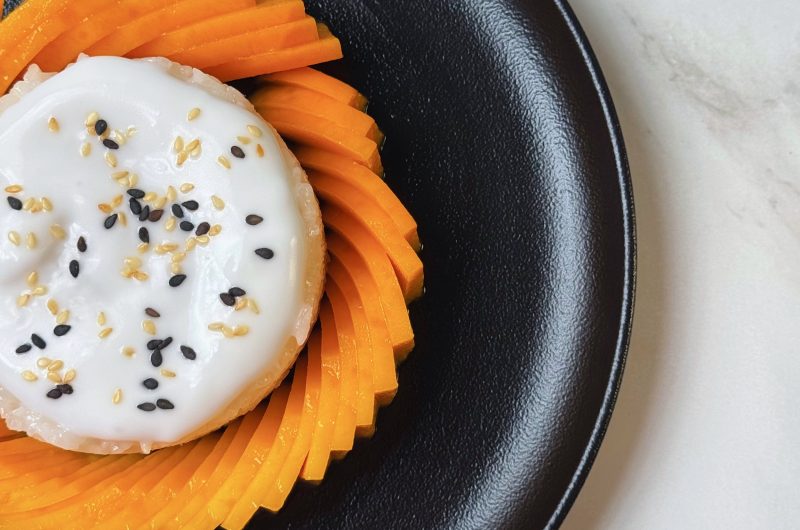
I let the rice come to room temperature and had a little fun with the plating. On the first plate, I shaped the rice with a ring mold and arranged thin slices of mango around it like rays of sunshine. I spooned coconut sauce over the rice and sprinkled it with black and white sesame seeds that I’d toasted in a pan.
On the second plate, I shaped the rice by hand into two quenelles. The rice kept sticking to the spoon when I tried shaping it, so I used my hands. I cut the mango into bigger pieces this time and served it alongside the rice.
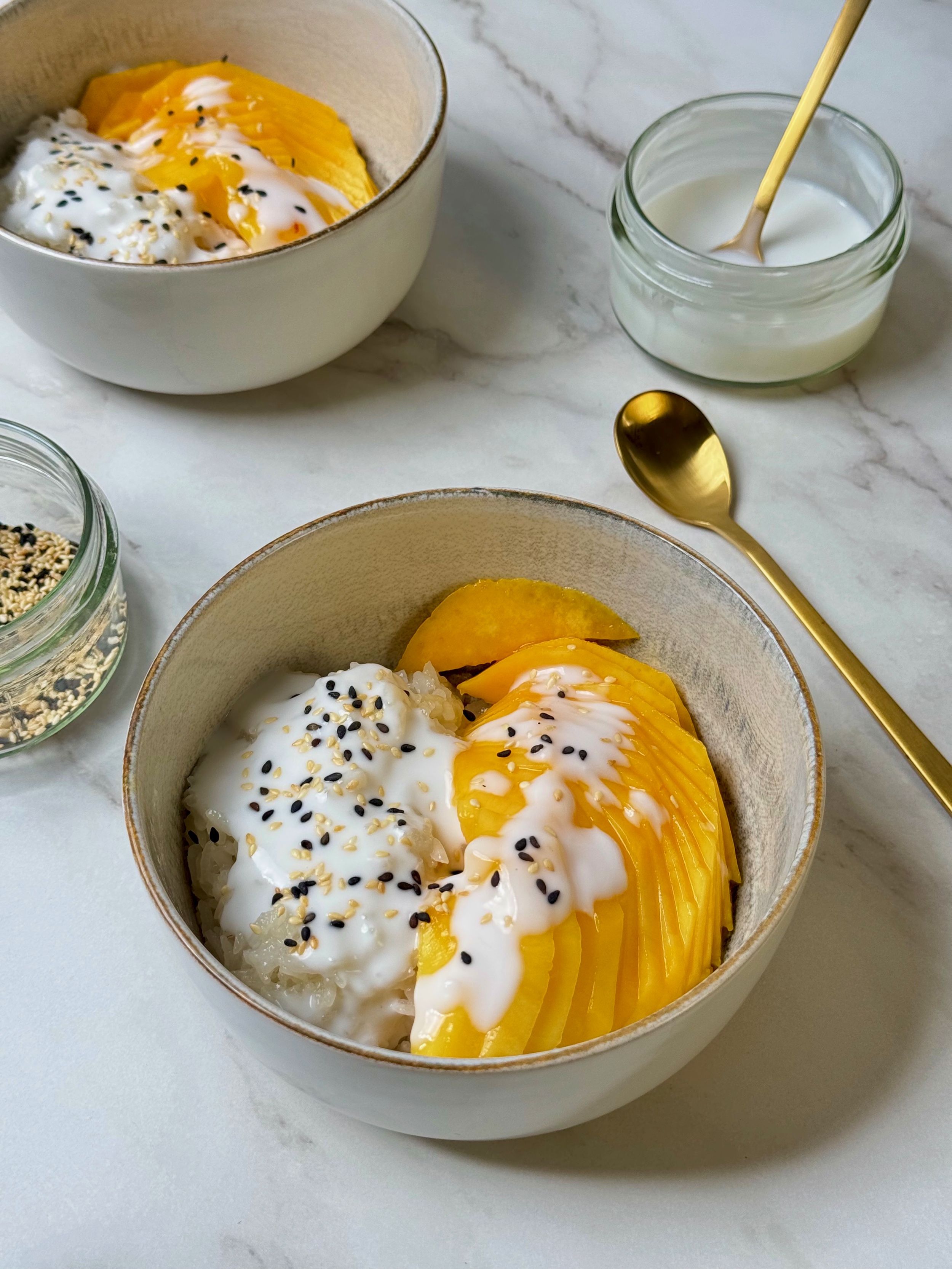
I also served the dessert in bowls. I put the rice on one side and thin slices of mango on the other, spooned coconut sauce over both, and sprinkled them with toasted black and white sesame seeds.
Another Dessert Inspired by Thailand
Mango sticky rice is the dessert I’d been missing. There’s another one I tried to recreate at home, inspired by something *le husband ordered at a café in Bangkok. That’s how my Thai tea cake with coconut cream and mascarpone came about.
Thai Mango Sticky Rice Recipe
Steamed Thai sticky rice with ripe mango, a lightly salted coconut sauce, and toasted black and white sesame seeds.
3-4
servings10
minutes30
minutes495
kcal4
hours30
minutesIngredients
- For the sticky rice
150 g white Thai glutinous rice (I used Better Thai Glutinous Rice)
120 ml unsweetened coconut milk (I used Aroy-D)
60 g sugar
¼ teaspoon salt
- For the coconut sauce
125 ml unsweetened coconut milk
1 teaspoon sugar
1 teaspoon cornstarch (5 g)
A pinch of fine salt
- To serve
1–2 ripe, sweet mangoes with smooth, non-fibrous flesh
Toasted black and white sesame seeds, for sprinkling
Directions
- Soak the rice. Rinse the rice in several changes of water. Cover it with cold water and soak for at least 4 hours, or overnight. Drain well.
- Steam the rice. Place the rice in a metal sieve set over a saucepan of steadily boiling water. Keep the water below the sieve. Cover and steam for about 30 minutes, or until the grains are tender all the way through. Gently turn the rice over from time to time so it cooks evenly. Check the water level as it steams and top it up with hot water as needed.
- Warm the coconut milk for the rice. Shake the carton well before measuring. Toward the end of the steaming time, warm the 120 ml coconut milk with the sugar and salt over low heat. Stir until the sugar dissolves.
- Let the rice absorb the coconut milk. Transfer the hot rice to a bowl and pour the warm coconut milk mixture over it. Stir gently, cover, and let it sit for 20–30 minutes.
- Make the coconut sauce. Stir the cornstarch into a little of the cold coconut milk measured for the sauce. Warm the remaining coconut milk with the sugar and salt, then stir in the cornstarch mixture. Cook over low heat, stirring, until the sauce thickens slightly.
- Serve. Let the rice cool to room temperature. Peel and slice the mango, then divide the rice and mango among three or four plates or bowls. Spoon over the coconut sauce and finish with toasted black and white sesame seeds.
Note
- Nutritional values are estimates and may vary depending on the ingredients used and the serving size.