I liked my carrot muffins with mixed nuts so much that I decided I had to try making a carrot cake with cream cheese frosting, too. It sat on my list for quite a while before I got around to it. Better late than never. 😁
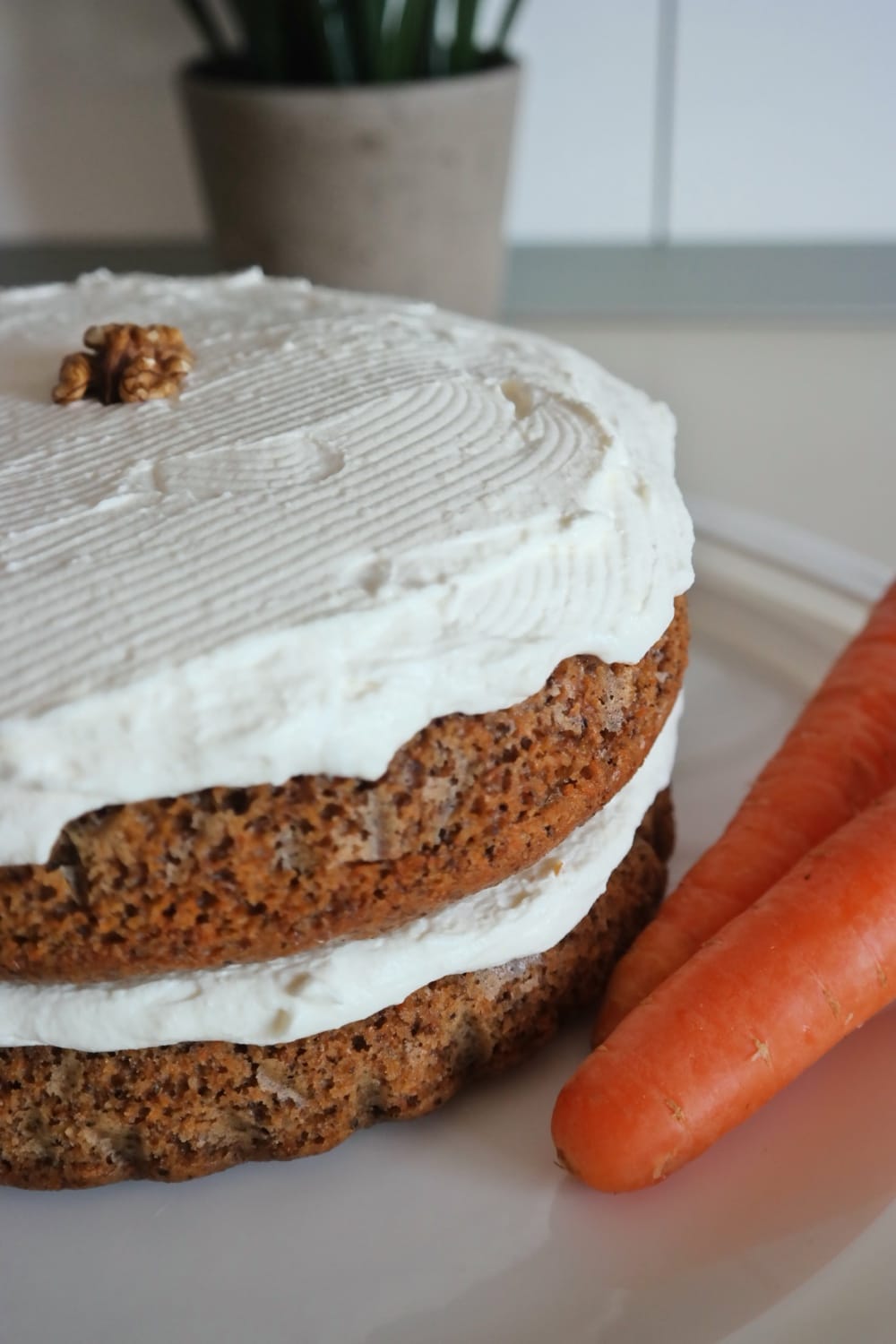
I kept the carrots and walnuts in the cake, but this time I toasted the walnuts in a skillet before grinding them. I baked two layers in a 20 cm (8-inch) pan and spread the frosting between them and over the top. The frosting is made with Philadelphia cream cheese, ricotta, and a little vanilla. You can leave the sides bare so both layers show.
Why You’ll Love This Carrot Cake
You can taste the walnuts. Toasting them first brings out their flavor. The finely chopped carrots are scattered throughout the cake, so you’ll see little flecks in each slice, and they help keep the cake moist. The smooth frosting adds a little tang from the cream cheese.
You can bake the layers separately. That’s what I did, and once they were cool, I could go straight to assembling the cake. If you only have one pan, just use it twice. The first layer also gives you a good idea of how long the second will take in your oven.
It’s easy to put together. Half the frosting goes between the layers and half goes on top. You can spread it with the back of a spoon and leave the swirls showing. That’s all it needs before it goes on the table.
Tips for the Cake and Frosting
Chop the carrots evenly. Cut them into roughly equal pieces before putting them in the food processor. Stop when they look like damp crumbs. If a few bigger pieces are still clinging to the sides of the bowl, push them toward the blade and pulse briefly. That way, you can catch those last pieces without chopping the rest too finely.
Let the toasted walnuts cool before grinding them. Tip them onto a plate so they cool faster than they would in the hot skillet. A few short pulses in the food processor make it easier to control the texture. You want ground walnuts that mix easily into the batter. Leave them in the processor too long and they’ll start to turn into a paste.
Mix the second batch of batter when the pan is nearly free. You can chop all the carrots and toast all the walnuts at the start, then divide them between the two layers. Wait until the pan is almost ready to use again before mixing the second batch, so the batter spends as little time as possible sitting on the counter after you add the baking powder. Test the cake with a toothpick in the center, where it takes longest to bake. If there’s wet batter on the toothpick, give it a little longer and check again.
Mix the frosting just until smooth. Room-temperature butter blends in more easily and is less likely to leave little lumps. Once you’ve added the cream cheese and ricotta to the whipped cream, stop mixing as soon as the frosting looks even. A short chill helps it firm up before assembly. Give the cake layers time to cool all the way through, too. The edges can feel cool while the center is still warm enough to soften the frosting.

Frequently Asked Questions
Can I bake all the batter in one pan?
Yes. You can bake one taller cake and slice it into two layers. Make sure there’s enough room in the pan for the batter to rise. The 30 minutes in the recipe card is a guide for one thin layer. If you bake all the batter together, check the center for doneness and let the cake cool completely before slicing it with a serrated knife.
Can I bake the layers a day ahead?
Yes. Once they’re completely cool, wrap them well so they don’t dry out overnight. If they’re still a little warm when you wrap them, moisture can collect inside the wrapping. You can make the frosting and assemble the cake on the day you’re serving it.
More Recipes You Might Like
If you liked the cake and frosting combination, try the pumpkin bread with mascarpone frosting. And if you have a few apples to use up, you could make an apple meringue cake or an upside-down cake with caramel.
Pumpkin Bread with Mascarpone Frosting – Pumpkin and cinnamon flavor the loaf, which is finished with mascarpone frosting and a chocolate glaze.
Apple Meringue Cake – A fluffy cake base, slightly tart apples with cinnamon and ginger, and a crisp meringue topping. It’s also a good way to use up egg whites left over from another recipe.
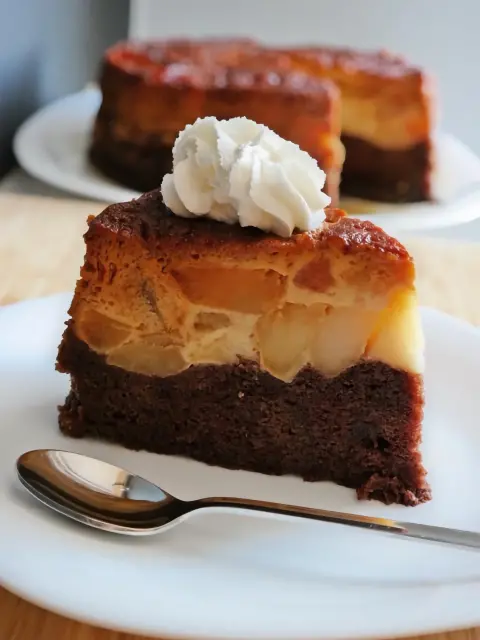
Upside-Down Apple Caramel Custard Cake – Caramelized apples and caramel custard sit over a chocolate sponge that soaks up some of the caramel.

Two-Layer Carrot Cake with Walnuts and Cream Cheese Frosting
Two layers of carrot cake with toasted walnuts and a smooth cream cheese frosting made with ricotta and vanilla.
12
slices30
minutes1
hour395
kcalIngredients
- For two 20 cm (8-inch) cake layers
4 large eggs
8 medium carrots
4 tablespoons granulated sugar
6 tablespoons brown sugar
8 tablespoons oil
1 packet baking powder
10 tablespoons flour
8 heaping tablespoons ground walnuts, toasted before grinding
- For the frosting
100 ml whipping cream
50 g butter, at room temperature
250 g Philadelphia cream cheese
250 g ricotta
2 tablespoons powdered sugar
1 teaspoon vanilla essence
Directions
- Preheat the oven to 180°C (350°F). Toast the walnuts in a skillet, let them cool, then grind them. Wash and peel the carrots, cut them into chunks, and finely chop them in a food processor.
- For the first layer, beat half the eggs with half of each type of sugar until the mixture doubles in volume. Add half the oil and beat for a few more seconds.
- Add half of each of the remaining cake ingredients: carrots, flour, baking powder, and walnuts. Mix until evenly combined, then pour the batter into the 20 cm (8-inch) cake pan.
- Bake for about 30 minutes. Check the center with a toothpick before taking the cake out of the oven.
- Repeat with the remaining ingredients to make the second layer. Let both layers cool completely.
- For the frosting, whip the cream with the powdered sugar until firm. Add the cream cheese, ricotta, butter, and vanilla essence. Mix briefly, just until smooth.
- Refrigerate the frosting for about 30 minutes. Spread half between the cooled cake layers and the rest over the top.
Note
- Nutrition values are estimates and may vary depending on the ingredients used and the serving size.